abqconcrete.com | (505) 550-0418
Free Estimates — Albuquerque, Rio Rancho, Santa Fe & Central New Mexico
M&M CONCRETE — CONCRETE DEMOLITION CONTRACTORS ALBUQUERQUE, RIO RANCHO & SANTA FE
45+ Years Licensed & Operating in New Mexico | (505) 550-0418 | abqconcrete.com
🔨 Driveways · Patios · Parking Lots · Curb & Gutter · Sidewalks · Block Walls · Footings · Free Estimates — Albuquerque, Rio Rancho & Santa Fe
Table of Contents
- What Concrete Demolition Contractors Actually Do
- Case Study — 4,300 Sq Ft Driveway Demolition in Albuquerque
- Every Concrete Structure We Demolish
- How We Handle a Demolition Project — Start to Finish
- Equipment We Use for Demolition
- Demolition Mistakes We See — And How We Avoid Them
- Why We Don’t Recommend Overlaying Old Concrete
- One Crew — Demolition Through the New Pour
- Areas We Serve
- 2026 Concrete Demolition Pricing
- Frequently Asked Questions
- Get a Free Demolition Estimate
What Concrete Demolition Contractors Actually Do
Breaking up old concrete looks simple from the curb — a jackhammer, a dumpster, a weekend. Done wrong, it damages utility lines, cracks adjacent structures, leaves an uneven sub-grade that dooms the new pour before it starts, and turns into a change order nightmare halfway through the job.M&M Concrete has been demolishing and removing concrete throughout Albuquerque, Rio Rancho, and Santa Fe for over 45 years. Driveways, patios, parking lots, curb and gutter, sidewalks, block walls, footings — if it’s concrete and it needs to come out, we’ve torn it out, hauled it off, and prepared the ground for what comes next.
Demolition is often treated as the throwaway phase of a concrete project — something to get through quickly before the “real” work of pouring new concrete begins. That mindset is exactly backwards. The demolition phase determines what condition the sub-grade is in when the new pour starts, and a sub-grade that’s rushed or poorly inspected during demo passes every one of its problems straight into the new concrete. A homeowner who hires the cheapest demolition bid without asking what happens after the concrete comes out is often paying twice for the same underlying issue — once to remove the old slab, and again a few years later when the new one fails for the same reason.
What a Good Demolition Contractor Actually Delivers
✅ What Real Concrete Demolition Includes:
- Utility locating before any equipment moves — gas, electric, water, irrigation, and private lines confirmed and flagged
- The right equipment for the structure — a driveway, a footing, and a block wall don’t come out the same way
- Full haul-off, not a pile left on your property — debris removed the same day it’s broken out whenever possible
- Sub-grade inspection after demo — checking for the same issues that caused the original failure before anything new goes in
- Protection of adjacent structures — driveways connect to garages, patios connect to homes, curb connects to street infrastructure
- A crew that also knows how to pour — demolition done by a company that understands what the replacement actually needs
Most homeowners never think about demolition quality until it goes wrong — a cracked garage slab from equipment vibration, a nicked gas line, or a sub-grade left exactly as bad as it was before. The difference between a demolition contractor who does this right and one who just wants the visible concrete gone doesn’t show up in the price on the day of the estimate — it shows up months later in whether the new concrete over that sub-grade actually holds. Call us at (505) 550-0418 for a free estimate.
📖 Further reading: Concrete Demolition and Removal Page | Concrete Contractors Albuquerque
📖 Further reading: Junk & Debris Removal | Land Clearing Albuquerque
Case Study — 4,300 Sq Ft Driveway Demolition in Albuquerque
REAL PROJECT · ALBUQUERQUE, NM · M&M CONCRETE
4,300 Sq Ft Failed Driveway — Full Demolition, Haul-Off & Replacement
Residential · Albuquerque, New Mexico · Circular drive with attached parking apron
4,300
Sq Ft Demolished
1
Day Demo & Haul-Off
🚜
In-House Equipment
🛡️
Utilities Located First
95%
Proctor Density Rebuild
4,000
PSI New Concrete
| Element | Specification |
|---|---|
| Total area demolished | 4,300 square feet — circular drive plus parking apron |
| Original condition | Heavily cracked, settled sections, no rebar found during demo |
| Demolition method | Hydraulic breaker attachment, hand tools near structures |
| Haul-off | Same-day removal, in-house equipment |
| Sub-grade rebuild | Compacted to 95% Proctor density before new base course |
| Location | Albuquerque, New Mexico |
Why This Driveway Failed in the First Place
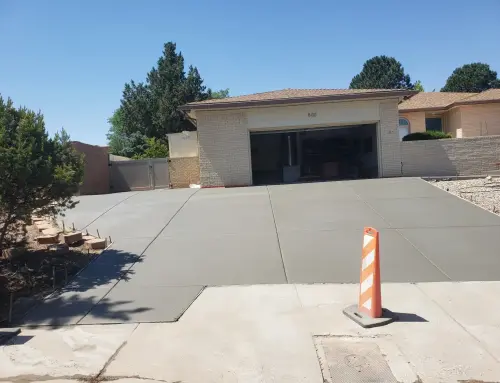
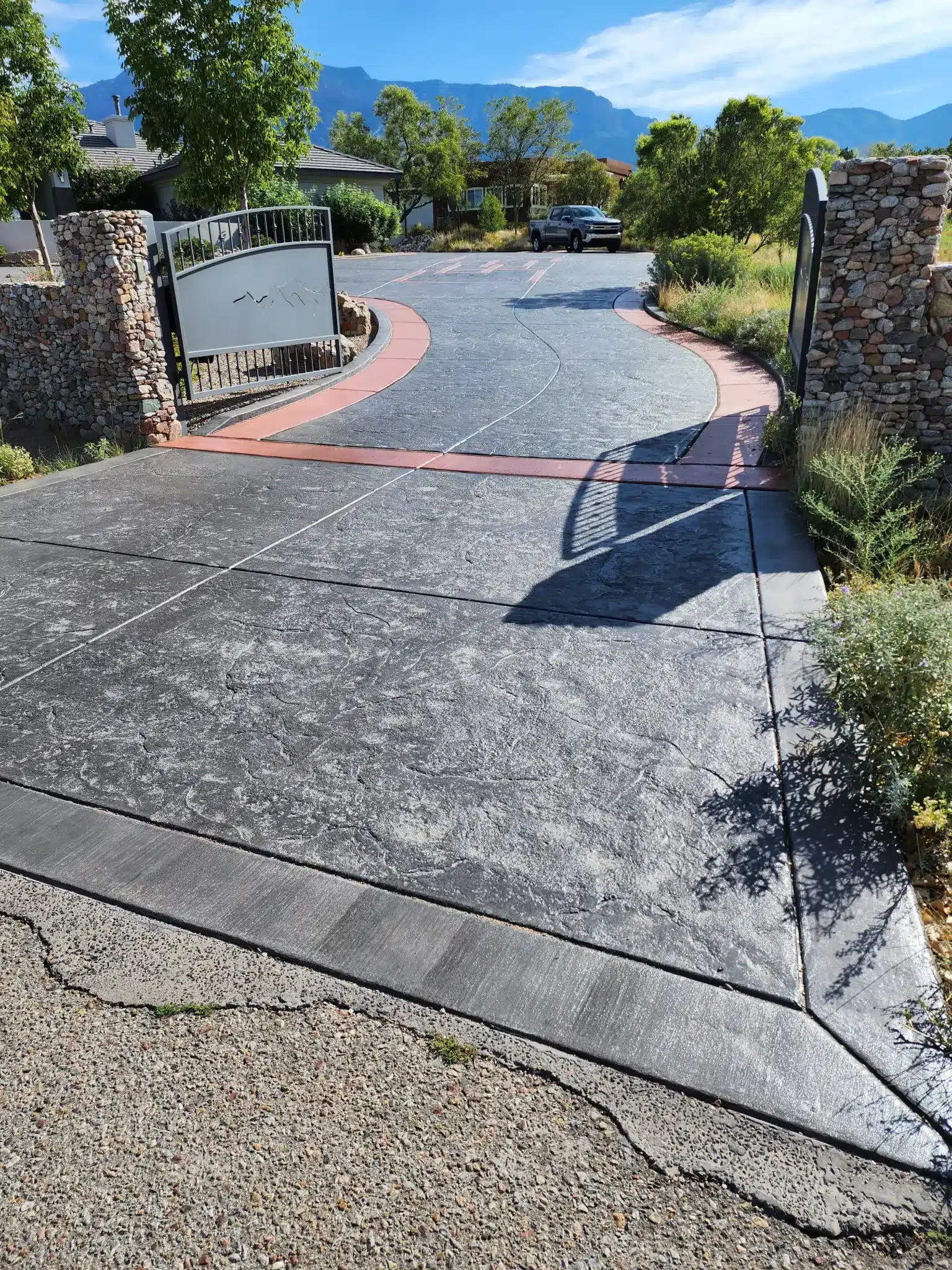
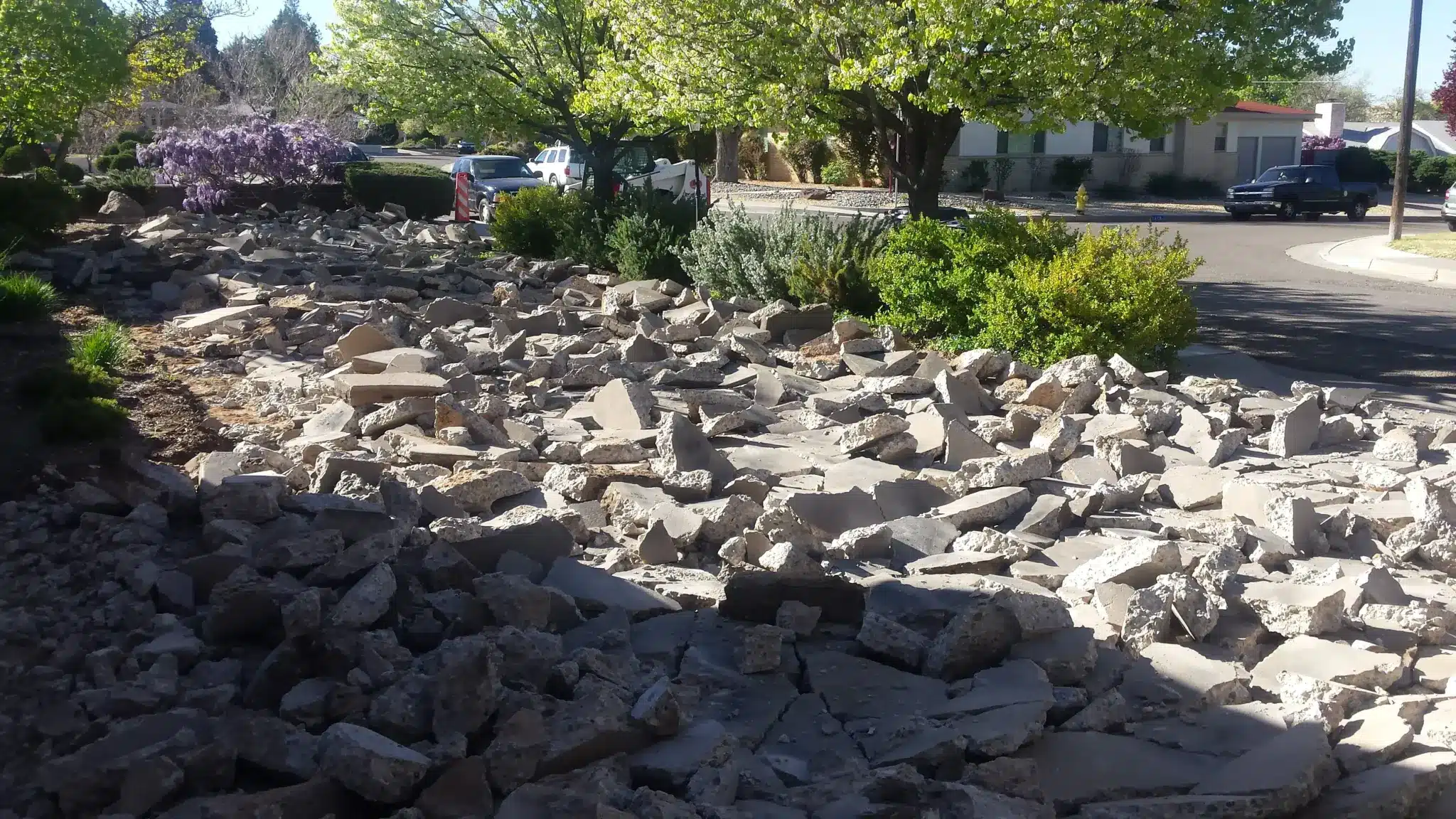
This 4,300 square foot circular driveway and attached parking apron had been cracking and settling for years before the homeowner called us. When we broke it out, the reason was obvious — no rebar anywhere in the slab, minimal base course under a thin pour, and drainage that sloped toward the garage instead of away from it. It’s a story we see across older Albuquerque properties regularly: flatwork poured fast, decades ago, without the reinforcement or sub-grade prep it needed.
The homeowner had already had two other contractors walk the property and quote a straightforward repour without ever asking what was underneath the failing slab. That’s a common shortcut — pricing the visible square footage and skipping any real assessment of why the original concrete failed. We don’t quote demolition and replacement without first understanding what’s causing the problem, because pouring new concrete over the same underlying issue just delays the next failure by a few years. A driveway this size represents a real investment, and a homeowner deserves to know why their last one failed before paying for a replacement that could fail the same way.
Demolition Day — Utilities First, Then Equipment
Before any equipment moved, we confirmed utility locations across the full footprint — this property had irrigation lines running under a section of the drive that a less careful crew could easily have caught with a breaker attachment. We used a hydraulic breaker mounted on our own equipment for the bulk of the slab, switching to hand tools near the garage foundation and front walkway to avoid transferring vibration into structures we weren’t touching. The full 4,300 square feet came out and was hauled off in a single day.
Managing a circular driveway adds a layer of complexity that a straight rectangular drive doesn’t have — curved sections break differently than straight runs, and the transition points where the circle meets the garage apron and street connection needed careful handling to avoid damaging the concrete that wasn’t part of this scope. We sequenced the breaker work to move around the circle systematically, keeping equipment access clear for haul-off trucks throughout the day rather than boxing ourselves in. That sequencing decision alone saved several hours compared to a less methodical approach, since re-positioning heavy equipment around a partially-cleared circular footprint costs real time on a job this size.
Rebuilding the Sub-Grade Before the New Pour
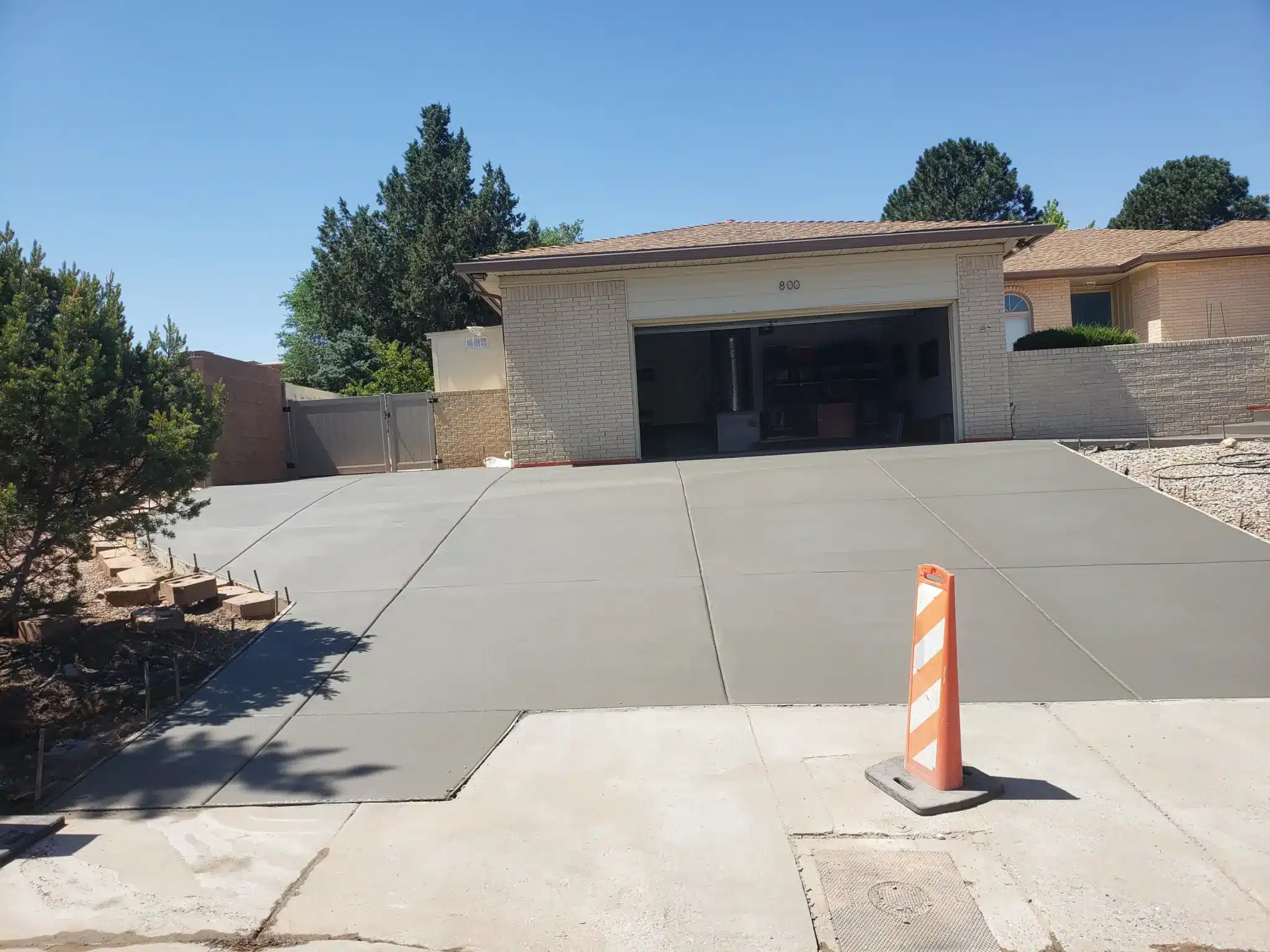
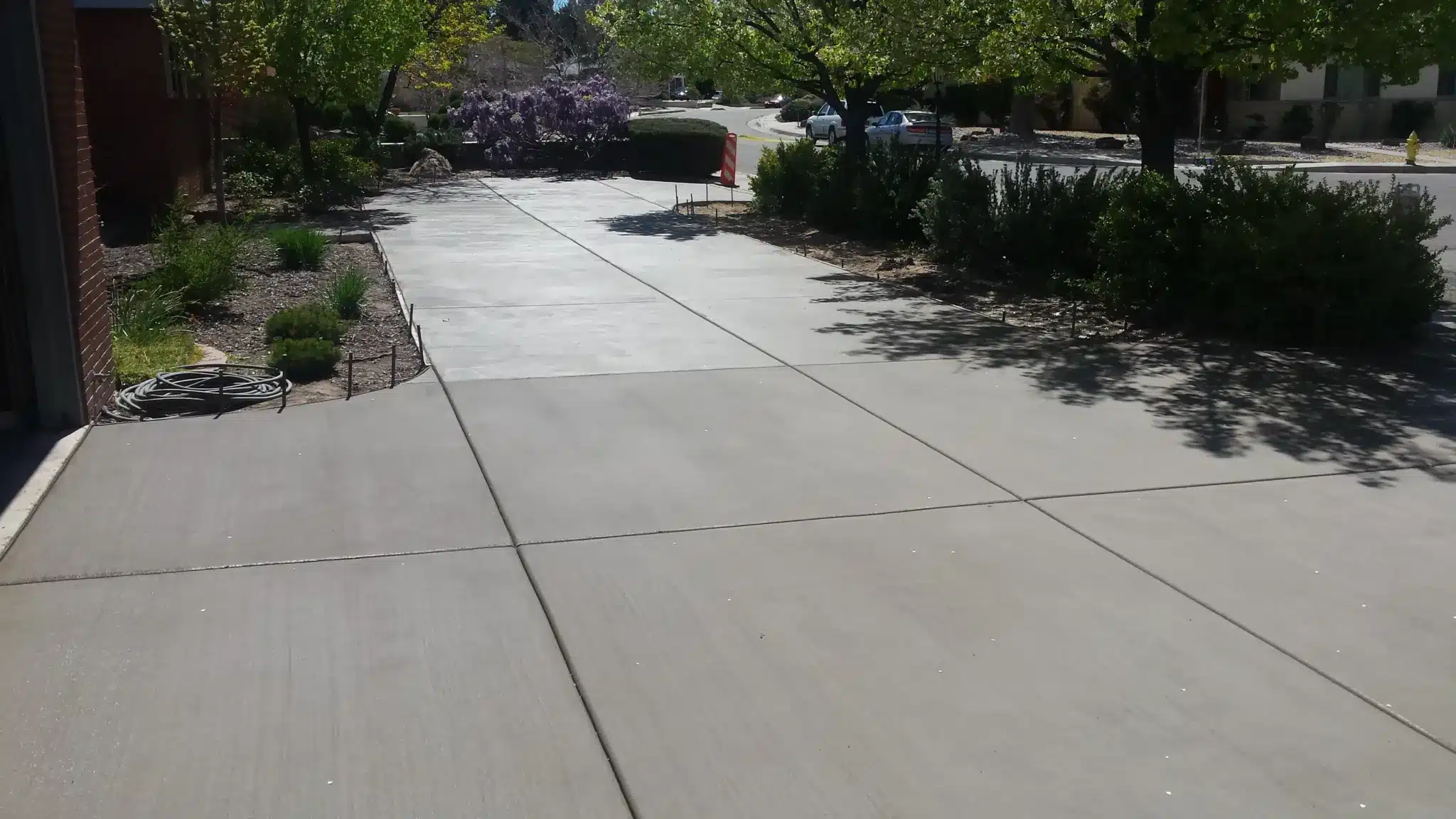
With the old slab gone, we inspected the exposed sub-grade for the same problems that caused the original failure — and found soft spots and inconsistent compaction exactly where the worst cracking had been. We compacted the rebuilt sub-grade to 95% Proctor density, brought in proper base course, and poured the new 4,000 PSI driveway with rebar reinforcement the original never had.
This inspection step is the entire reason full demolition beats an overlay on a project like this one. If we had simply poured new concrete over the existing slab, the same soft spots and drainage problem would have kept working underneath the new surface, and the homeowner would have been back where they started within a few years — except this time with the added cost of a failed overlay to undo before fixing the real problem. That’s the trade-off every homeowner is actually making when they choose the cheaper overlay option over a full tear-out: a lower bill today in exchange for paying for the same repair twice.
4,300 square feet of failed concrete, gone in a day — replaced with a driveway built to last. Utilities protected, sub-grade corrected, not just repeated. M&M Concrete — 45+ years — call (505) 550-0418.
📖 Further reading: Concrete Driveway Installation Guide | Concrete Driveway Contractors in Albuquerque | Guide to a Long-Lasting Concrete Driveway
Every Concrete Structure We Demolish
If it’s concrete and it’s in the way, we can take it out. Here’s the full range of structures we demolish and remove throughout Albuquerque, Rio Rancho, and Santa Fe.
Residential & Commercial Structures
Every structure on this list requires a slightly different approach, and quoting them all the same way is how a demolition estimate ends up wrong. A driveway comes out fast with a hydraulic breaker across an open area, while a block wall footing next to a property line needs careful hand work instead. Curb tie-ins add another variable, since they have to account for the municipal drainage system on the other side of them. We assess each structure individually rather than applying one blanket demolition rate to everything on a property.
Most Requested
🚗 Driveways
Full driveway tear-out and haul-off, sub-grade inspected and rebuilt before the new pour. See our concrete driveways page and driveway replacement guide.
🏡 Patios
Old cracked or settled patios removed carefully around adjacent structures and landscaping. See our concrete patios guide.
🅿️ Parking Lots
Commercial parking lot demolition and haul-off, phased to keep businesses operating where needed. See our concrete parking lots guide.
🛣️ Curb & Gutter
Municipal-spec curb and gutter removal and replacement, coordinated with street drainage requirements.
🚶 Sidewalks
Sidewalk sections removed and replaced to meet current grade and accessibility requirements. See our concrete sidewalks guide.
🧱 Block Walls
CMU and concrete block wall demolition, including footing removal when a wall is being fully replaced.
🏗️ Footings & Foundations
Old footings, foundation remnants, and structural concrete removed ahead of a new build. See our foundations page.
🔲 Any Concrete Structure
Steps, pool decks, equipment pads, retaining walls — if it’s concrete, we can remove it. Call (505) 550-0418 to discuss your specific structure.
How We Handle a Demolition Project — Start to Finish
Here’s exactly what happens on every demolition job we take on. No shortcuts, no skipped steps.
The Anatomy of a Proper Demolition Project
DEMOLITION PROCESS — WHAT HAPPENS AT EACH STAGE
🛡️ UTILITY LOCATING — CONFIRMED BEFORE EQUIPMENT MOVES
DEMOLITION — RIGHT EQUIPMENT FOR THE STRUCTURE
Hydraulic breaker, hand tools near sensitive structures
🚛 HAUL-OFF — SAME-DAY REMOVAL, IN-HOUSE EQUIPMENT
🪨 SUB-GRADE INSPECTION & REBUILD — 95% PROCTOR DENSITY
1. Site Assessment & Utility Locating
We walk the site, identify the full scope of what needs to come out, and confirm every utility line before any equipment touches the ground. This step alone prevents the most expensive demolition mistakes. On properties with older infrastructure or additions built over multiple decades, this assessment often turns up utility runs that were never properly documented — exactly the kind of surprise that a locate call and a careful walk-through catch before they become a five-figure repair.
2. Protecting What Stays
Adjacent structures, landscaping, and anything not being demolished get identified and protected before work begins — not discovered as a problem mid-job.
3. Demolition
We match the equipment to the structure. A large open driveway can take a hydraulic breaker at full speed. Concrete near a foundation, gas meter, or property line gets broken out by hand or with more controlled equipment. This judgment call is where experience actually matters — knowing which sections of a demolition job can move fast and which need a slower, more careful approach is not something a crew learns on their first few jobs.
4. Haul-Off
Debris gets loaded and hauled off using our own trucks and equipment — ABQ Backhoe & Bobcat Services — same day whenever the project allows. We don’t leave broken concrete staged on a driveway or lawn for days waiting on a separate hauling company, which is a common source of delay when demolition and disposal are handled by different vendors.
5. Sub-Grade Inspection
Once the old concrete is gone, we inspect what’s underneath for the same issues that likely caused the original failure — soft spots, organic material, poor drainage, inadequate base course. This inspection is the entire reason demolition should never be treated as a commodity service — the value isn’t just in removing the old concrete, it’s in understanding what condition the ground underneath actually needs to be in before anything new goes on top of it.
6. Rebuild & Compaction
If a new pour is next, we compact the sub-grade to 95% Proctor density and bring in proper base course before any concrete is scheduled.
📖 Further reading: Why Quality Site Prep Matters | Excavation & Dirt Grading Guide
Equipment We Use for Demolition
Different structures require different approaches. We own and operate our own equipment rather than renting or subcontracting, which means the right tool is available for every job — no waiting on a rental company’s schedule to get the correct attachment on site.
Why Owning Equipment Changes the Outcome
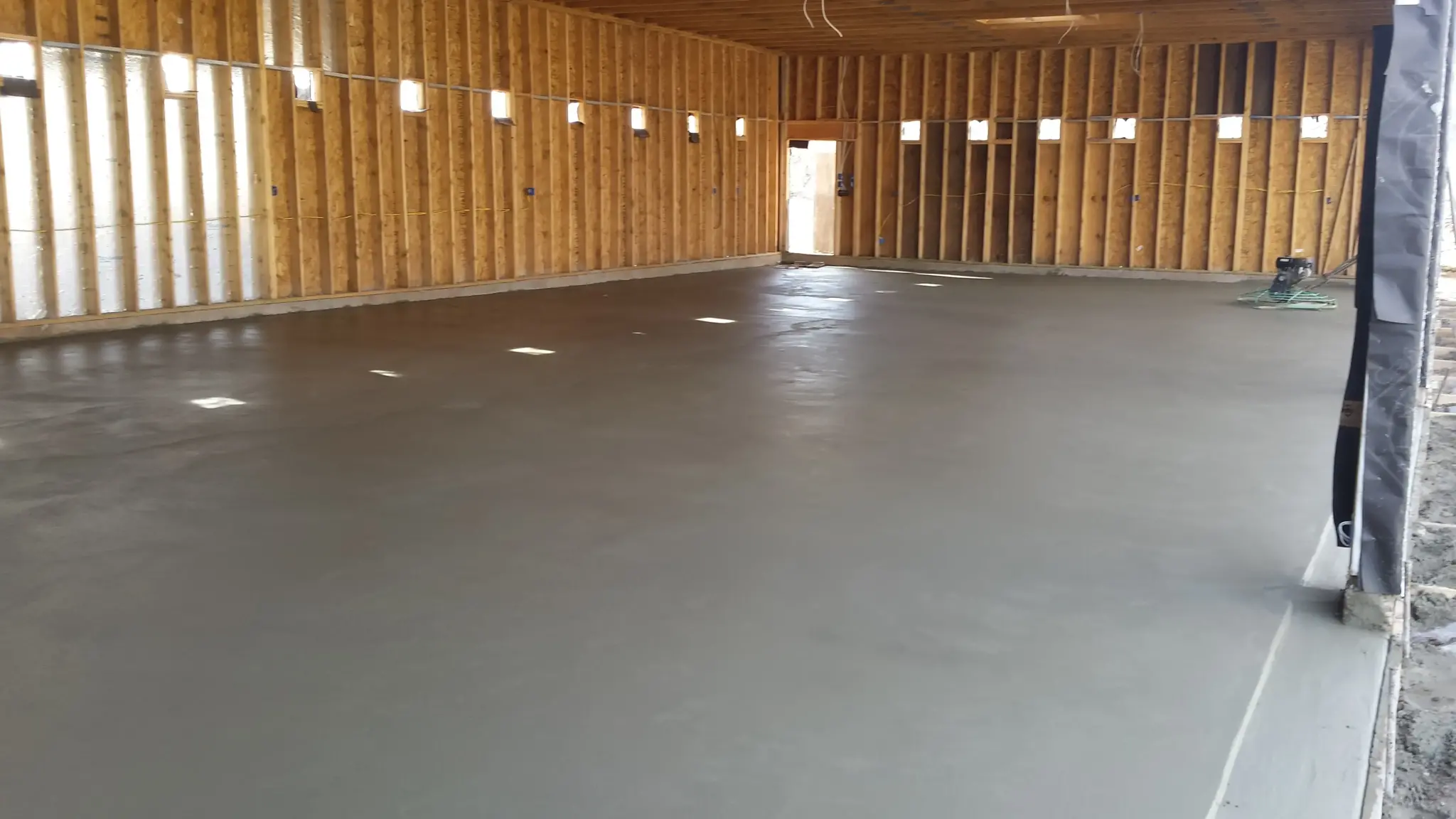
A contractor who rents equipment for each job is working with whatever happens to be available that week, not necessarily what the job actually calls for. We keep a range of attachments and machines on hand specifically because Corrales barn floors, Albuquerque driveways, and Santa Fe foundation footings don’t all call for the same approach — and switching between hand tools and a hydraulic breaker mid-job shouldn’t depend on a rental counter’s inventory. Owning the equipment also means we’re not paying daily rental fees that get passed on to the homeowner, and we’re not stuck waiting for a specific attachment to become available before starting work on your property.
Matching Equipment to the Structure
🔨 Hydraulic Breaker Attachments
Mounted on our Bobcats and skid steers for fast, efficient demolition of large open areas — driveways, patios, and parking lots.
🚜 Backhoes & Excavators
For footings, foundations, and structural concrete that requires more excavation depth alongside the demolition itself.
🔧 Hand Tools & Jackhammers
Used near foundations, utility lines, and property boundaries where heavy equipment vibration risks damaging what stays.
🚛 Haul-Off Trucks
Our own trucks for debris removal — no waiting on a rental dumpster or a separate hauling contractor’s schedule.
📖 Further reading: Bobcat and Backhoe Services in Albuquerque | ABQ Bobcat and Backhoe Services
Demolition Mistakes We See — And How We Avoid Them
In 45 years we’ve been called in to fix a lot of demolition jobs that went wrong. The same mistakes show up over and over, and nearly all of them come from a crew trying to move fast rather than move correctly.
What Goes Wrong on a Rushed Demolition
Speed sells on a demolition quote — a lower number, a faster timeline, a crew that can start tomorrow. What that speed usually leaves out is exactly what determines whether the project succeeds once concrete goes back in the ground. None of the following mistakes are visible to a homeowner watching from the driveway on demo day — they only show up after the new concrete has been down for a while.
⚠️ The Mistakes We Get Called In to Fix:
- Utility strikes — gas, electric, or irrigation lines hit because nobody located them before breaking ground
- Damaged adjacent structures — vibration from heavy equipment cracking a foundation or wall that was supposed to stay
- Debris left on-site — a pile of broken concrete instead of full haul-off, leaving the homeowner to arrange disposal
- No sub-grade inspection — pouring new concrete right back onto the same soft spot or drainage problem that caused the original failure
- Incomplete removal — old base material or partial footings left behind, undermining the new pour
- No coordination with the new pour — a demolition crew and a concrete crew who never talk to each other about what the sub-grade actually needs
✅ How M&M Concrete — 45+ Years — Avoids These:
- Utilities located and flagged before any equipment moves, every time
- Equipment matched to the structure — hand tools near anything that needs protecting
- Full haul-off included, same day whenever the project allows
- Sub-grade inspected after every demolition, before anything new is scheduled
- Complete removal of old base material and partial structures, not just the visible slab
- The same crew handles demolition and the new pour — no communication gap
Why Poor Demolition Doesn’t Show Up Right Away
Most demolition shortcuts aren’t visible on the day the new concrete is poured. A sub-grade that wasn’t properly inspected or compacted looks identical to a properly prepared one once fresh concrete is sitting on top of it. The difference shows up six months to two years later, when the same settling or cracking pattern that doomed the original slab starts working its way through the replacement — except now the homeowner has paid for demolition, haul-off, and a new pour, only to be facing the same underlying problem all over again.
Why We Don’t Recommend Overlaying Old Concrete
Many homeowners ask about pouring new concrete directly over an old, failing slab to save on demolition cost. We don’t recommend it, and here’s the honest reason why.
Reflective Cracking Isn’t a Maybe — It’s a When
Overlaying almost always leads to reflective cracking, where every crack in the old slab telegraphs straight up through the new concrete within a season or two. The new layer is only as stable as what’s underneath it, and a failing slab doesn’t become a stable base just because there’s fresh concrete on top of it.
Full Demolition Costs More Upfront — And Less Over Time
A full tear-out costs more at the start than an overlay, but it’s the only way to guarantee the new concrete actually lasts. Starting with a clean, inspected, properly compacted sub-grade means the new pour gets the full structural lifespan it’s supposed to have — instead of showing the old slab’s cracks again within a year or two.
When an Overlay Might Actually Make Sense
There are limited situations where a thin decorative overlay over structurally sound concrete makes sense — a cosmetic refresh on a slab with no cracking, settling, or drainage issues, purely for appearance. That’s a very different scenario from overlaying a failing slab to avoid the cost of demolition, and we’ll tell a homeowner honestly which situation theirs actually is during the site visit, rather than selling whichever option is easier to schedule or more profitable for us to perform.
📖 Further reading: Concrete Demolition and Replacement — Full Guide
One Crew — Demolition Through the New Pour
Most homeowners assume demolition and concrete work come from different companies. We handle both under one roof.
Why That Matters More Than It Sounds
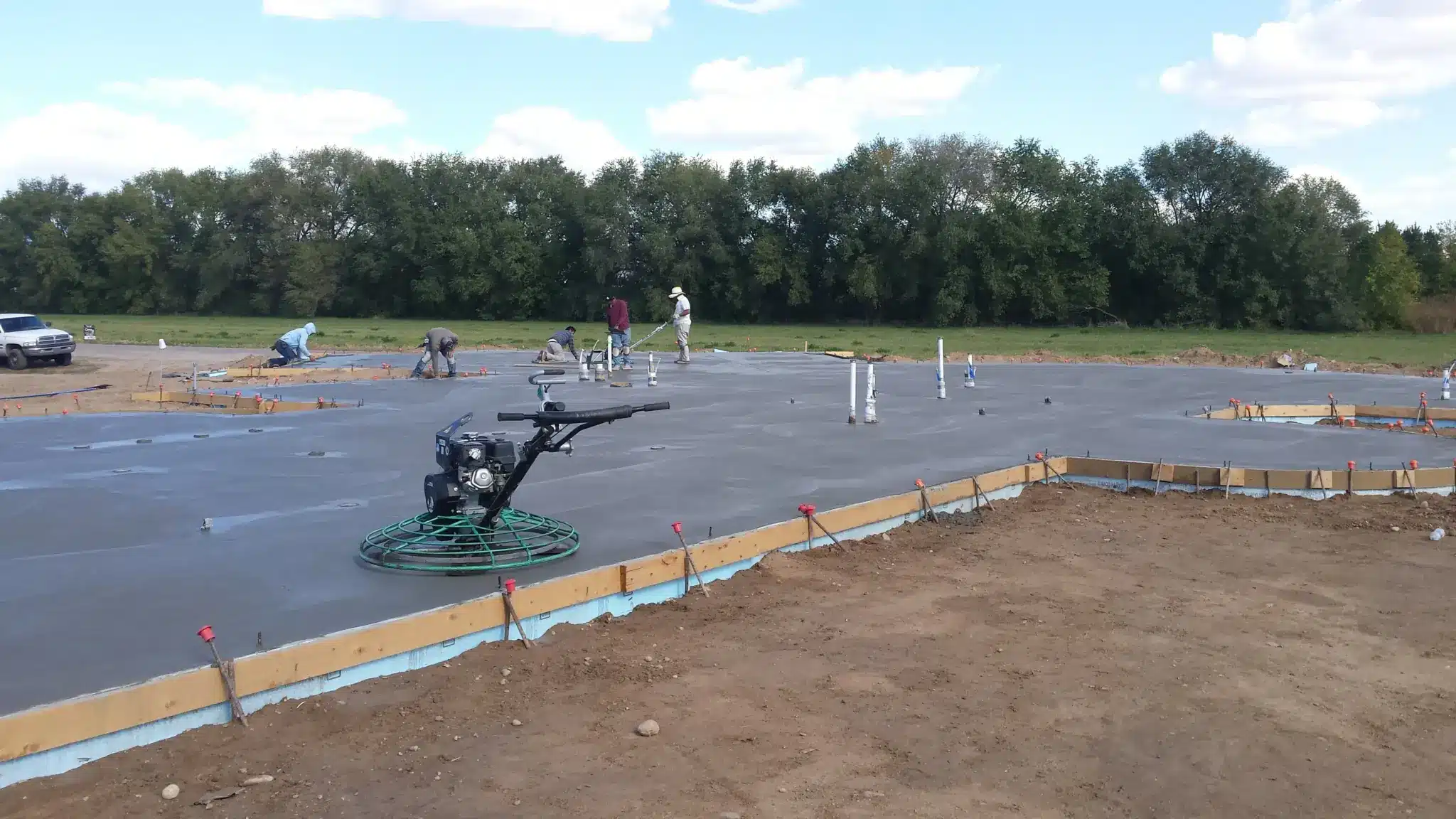
When the same crew that tears out your old concrete also pours the new slab, there’s no gap between what the demolition crew found and what the concrete crew builds on top of it. If the sub-grade needs extra compaction or a drainage correction, the same people who identified the problem are the ones fixing it — not a separate contractor working from someone else’s notes, or worse, no notes at all.
What This Looks Like on a Typical Project
On a standard driveway replacement, that means the crew that broke out the old slab in the morning is often the same crew forming and pouring the new one within days — not weeks later after coordinating a separate concrete company’s schedule, re-explaining the site conditions, and hoping nothing was lost in the handoff. One estimate, one contract, one company accountable for the entire outcome from the first breaker strike to the final seal.
📖 Further reading: Full Service Concrete Contractor Albuquerque | Residential Concrete Contractors in Albuquerque
Areas We Serve
M&M Concrete — 45+ years — provides concrete demolition throughout Albuquerque, Rio Rancho, Santa Fe, and the surrounding region. Demolition access, disposal distance, and site conditions vary across this territory, and we account for that in every quote rather than applying one flat rate regardless of location.
Albuquerque Metro
- Albuquerque — All neighborhoods, residential and commercial demolition. See our Albuquerque concrete contractors page and our concrete contractor in Albuquerque NM guide.
- Rio Rancho — Full demolition services throughout Rio Rancho’s residential and commercial areas. See our Rio Rancho contractors guide.
- Corrales & North Valley — Demolition around mature trees, private utilities, and larger rural lots.
Beyond the Metro Area
- Santa Fe — Demolition and replacement engineered for Northern NM freeze-thaw conditions. See our Santa Fe foundations page and our concrete contractors in Santa Fe NM guide.
- Placitas — Demolition on rocky, hillside terrain throughout Sandoval County.
- Edgewood & East Mountains — Demolition and replacement built for freeze-thaw conditions.
- Los Lunas & Valencia County — Residential and agricultural demolition throughout Valencia County.
Every one of these areas presents its own access and disposal considerations — a Santa Fe historic district job has different constraints than a rural Los Lunas property, and a Placitas hillside demolition needs different equipment staging than a flat Rio Rancho subdivision lot. We factor all of that into the estimate rather than quoting one standard rate across a territory this varied.
Commercial demolition is also part of our regular scope — see our commercial concrete contractors page. Want to see finished results before you call? Browse our project gallery or read more about M&M Concrete.
2026 Concrete Demolition Pricing
Demolition pricing depends on the structure, access, and whether haul-off and a new pour are included. Here’s a realistic breakdown for the Albuquerque, Rio Rancho, and Santa Fe market in 2026.
| Structure | Unit | 2026 Cost Range |
|---|---|---|
| Driveway demolition & haul-off | Per sq ft | $2 – $6 |
| Patio demolition & haul-off | Per sq ft | $2 – $5 |
| Parking lot demolition | Per sq ft | $1.50 – $4 |
| Curb & gutter removal | Per linear ft | $8 – $18 |
| Sidewalk removal | Per sq ft | $2 – $5 |
| Block wall demolition | Per linear ft | $10 – $25 |
| Footing / foundation removal | Per project | $1,500 – $8,000+ |
| Debris haul-off (if separate) | Per load | $500 – $850 |
| Full demolition + new pour (driveway) | Per sq ft, all-in | $8 – $16 |
These are honest numbers for the Albuquerque, Rio Rancho, and Santa Fe market in 2026. Access, structure size, and disposal distance all affect final pricing. Call M&M Concrete at (505) 550-0418 for a written estimate.
📖 Full pricing: Concrete Contractor Costs — Full 2026 Price Guide
Frequently Asked Questions — Concrete Demolition Contractors
How much does concrete demolition cost?
Driveway and patio demolition typically runs $2 to $6 per square foot including haul-off. Curb and gutter removal runs $8 to $18 per linear foot. Footing and foundation removal is usually priced per project due to variable depth and access. See the complete 2026 pricing guide above for full detail.
Do you haul away the debris?
Yes — full haul-off is included on nearly every demolition job, using our own trucks and equipment. We don’t leave a pile of broken concrete for the homeowner to deal with. Disposal is handled the same day whenever site access and project size allow it.
Can you demolish concrete near my house without damaging it?
Yes. We use hand tools and controlled equipment near foundations, utility lines, and structures that need to stay, reserving heavy equipment like hydraulic breakers for open areas away from anything sensitive. This is a judgment call made on-site by an experienced crew, not a fixed rule applied the same way to every property.
Do you locate utilities before demolition?
Yes, on every job. Gas, electric, water, irrigation, and private utility lines are located and flagged before any equipment moves. This is standard procedure, not an optional add-on, and it’s the single step most responsible for preventing the expensive mistakes that come with rushed demolition work.
Can you demolish and pour the new concrete in the same visit?
Often yes, depending on the scope and sub-grade condition. Because we handle both demolition and the new pour, we can move directly from demo into sub-grade prep and forming without waiting on a separate contractor’s schedule. On the 4,300 square foot driveway case study above, the full sequence from demolition to the final sealed surface was completed as one continuous project.
What structures can you demolish?
Driveways, patios, parking lots, curb and gutter, sidewalks, block walls, footings, foundations, steps, pool decks, and equipment pads — essentially any concrete or CMU structure. Call (505) 550-0418 to discuss your specific project, and we’ll tell you honestly what equipment and approach it calls for before we ever give you a number.
Do you serve Rio Rancho and Santa Fe as well as Albuquerque?
Yes. M&M Concrete — 45+ years — serves the entire central New Mexico region including Rio Rancho, Santa Fe, Placitas, Corrales, Edgewood, and Los Lunas. Access and disposal logistics vary across that territory, and we account for that in every estimate rather than quoting the same flat rate no matter where the project is located.
How do I get a free demolition estimate?
Call us at (505) 550-0418 or request an estimate online at abqconcrete.com. We come to your site, assess the structure and access, and give you a written quote covering demolition, haul-off, and — if needed — the new pour.
Get a Free Concrete Demolition Estimate
Old, failing concrete is more than an eyesore — it’s a tripping hazard, a drainage problem, and a liability that gets worse every year it sits. M&M Concrete — 45+ years — handles demolition, haul-off, and replacement for driveways, patios, parking lots, curb and gutter, sidewalks, block walls, footings, and any other concrete structure throughout Albuquerque, Rio Rancho, and Santa Fe.
One crew, one company accountable from the first breaker strike to the finished new pour. Whether your project is a single cracked sidewalk section or a full driveway demolition like the 4,300 square foot case study above, the same standard applies — utilities located, equipment matched to the structure, full haul-off, and a sub-grade that’s actually inspected before anything new goes in. That standard doesn’t change based on project size, and it’s the reason our replacement pours hold up long after a rushed demolition job’s would have failed again. Call (505) 550-0418 today to get your project on the schedule.
Concrete Demolition — Albuquerque, Rio Rancho & Santa Fe
M&M Concrete — 45+ Years & Still Pouring
Driveways · Patios · Parking Lots · Curb & Gutter · Sidewalks · Block Walls · Footings
Locally owned. Family operated. Licensed, bonded & insured.
abqconcrete.com | (505) 550-0418 | Serving Albuquerque, Rio Rancho, Santa Fe, Placitas, Corrales, Edgewood, Los Lunas & all of Central New Mexico