abqconcrete.com | (505) 550-0418 | Free Estimates — Edgewood, Sedillo, Tijeras & the East Mountains
M&M CONCRETE — CONCRETE CONTRACTORS IN EDGEWOOD & THE EAST MOUNTAINS
45+ Years Licensed & Operating in New Mexico | (505) 550-0418 | abqconcrete.com
🏔️ Driveways · Foundations · Stamped Concrete · Retaining Walls · Excavation · Demolition & Replacement · Free Estimates — Edgewood · Sedillo · Tijeras · Sandia Park · PAAKO · Moriarty
Table of Contents
- Case Study — 4,200 Sq Ft Foundation & Driveway in Sandia Park, NM
- Why East Mountains Concrete Is Different
- East Mountains Soil & Climate — What Every Homeowner Needs to Know
- Concrete Services We Provide in Edgewood & the East Mountains
- Driveways in the East Mountains — What the Terrain Requires
- Foundations in the East Mountains
- Stamped & Decorative Concrete in the East Mountains
- Freeze-Thaw Mix Design — Why It’s Non-Negotiable Up Here
- Compaction — Why Sub-Grade Matters on Every East Mountains Project
- Excavation & Site Prep in the East Mountains
- Communities We Serve
- 2026 Concrete Pricing in Edgewood & the East Mountains
- How to Choose a Concrete Contractor in the East Mountains
- Frequently Asked Questions
- Get a Free Estimate in Edgewood or the East Mountains
Case Study — 4,200 Sq Ft Foundation & Driveway in Sandia Park, NM
REAL PROJECT · SANDIA PARK, NM · M&M CONCRETE
4,200 Sq Ft Foundation + Coordinated Driveway — Granite Terrain Custom Home
Residential · Sandia Park, East Mountains, New Mexico · Granite sub-grade · Air-entrained mix
|
4,200 Sq Ft Foundation |
30″ Footing Depth |
|
4,500 PSI Air-Entrained |
🪨 Granite Sub-Grade |
|
🌲 7,000 Ft Elevation |
🚗 Coordinated Driveway |
🏗️ Project Specification
| Foundation area | 4,200 square feet, custom home |
| Footing depth | 30 inches — below Sandia Park frost line |
| Concrete mix | 4,500 PSI, air-entrained for freeze-thaw |
| Sub-grade | Granite bedrock and decomposed granite |
| Driveway | Coordinated broom-finish, cross-slope drainage |
| Location | Sandia Park, East Mountains, New Mexico |
Reading the Granite Before the First Bucket of Dirt Moved
This Sandia Park property sits on a mix of exposed granite and decomposed granite typical of the area — good news for long-term stability, but not a site you excavate with a standard blade and a generic plan. Before any digging started, we walked the lot to identify where bedrock sat close to the surface and where decomposed granite would need to be worked. That assessment shaped the whole excavation sequence, not just the foundation footprint.
Footings Deep Enough for 7,000 Feet
At this elevation, the frost line runs meaningfully deeper than anything in the Albuquerque valley. We set footings at 30 inches — well below the frost depth for this part of the East Mountains — and used a 4,500 PSI air-entrained mix throughout the foundation. Air entrainment traps microscopic air bubbles in the concrete, giving the water inside somewhere to expand when it freezes instead of cracking the slab from the inside out. This is not an upgrade we offer — it is the standard mix on every East Mountains foundation we pour.
Coordinating the Driveway With the Grade
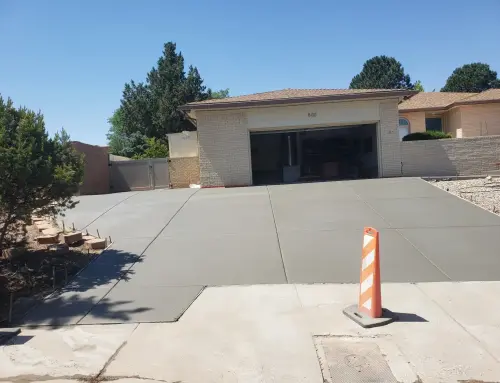
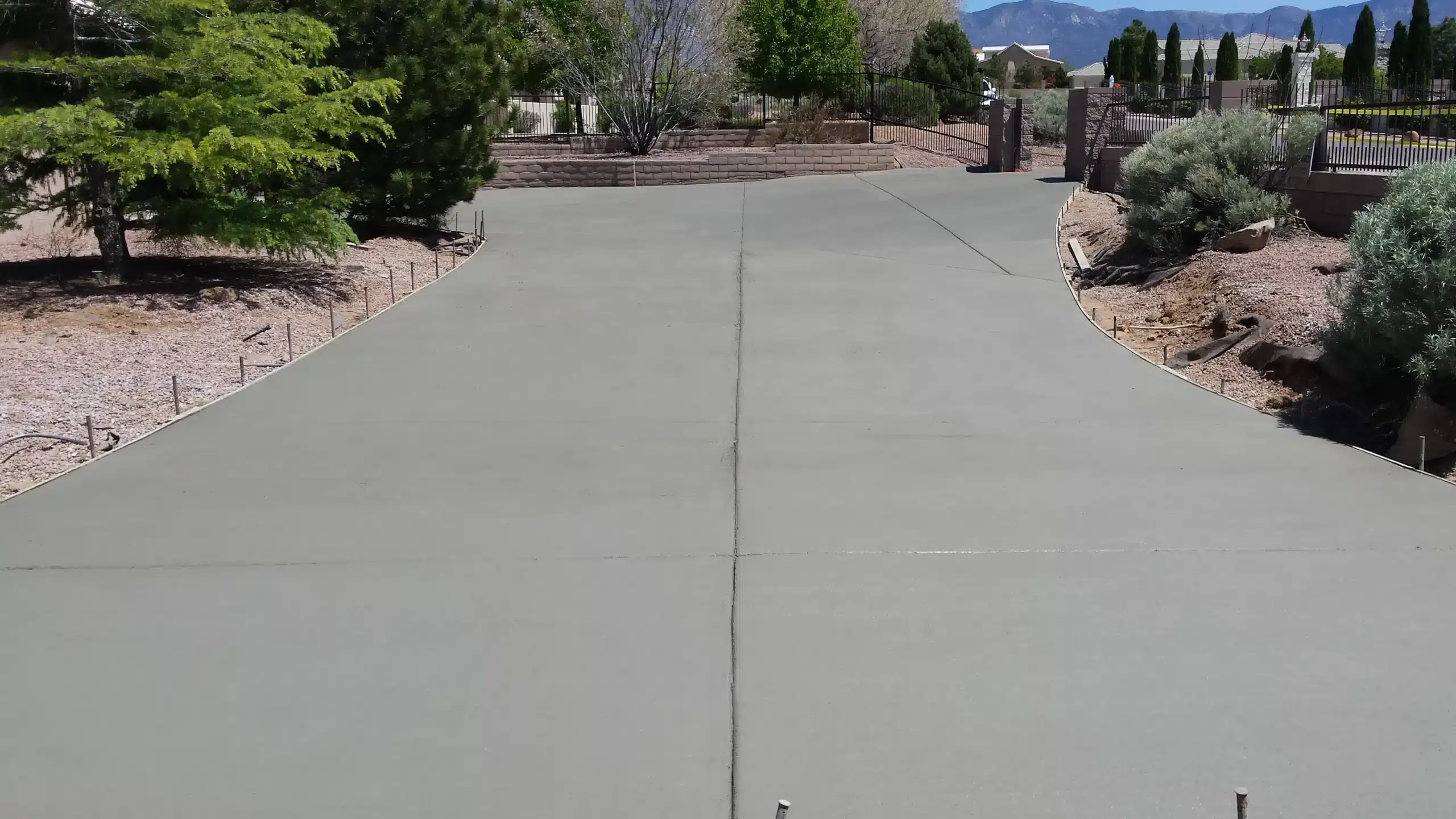
Once the foundation was cured, we formed and poured the coordinated driveway, built with the same attention to drainage that every East Mountains project requires. Cross-slope was built into the forming layout to move monsoon runoff and snowmelt away from the garage and foundation rather than letting it pool or sheet down the drive. The broom finish was applied to provide traction on the grade — a detail that matters every winter this property sees ice on the drive.
A foundation and driveway built for 7,000 feet, not for the valley. Granite sub-grade, deep footings, air-entrained mix, drainage designed in from the start. The same standards M&M Concrete — 45+ years — applies on every East Mountains project. (505) 550-0418
📖 Further reading: Concrete Foundations Guide | Concrete Driveway Installation Guide
Why East Mountains Concrete Is Different
The East Mountains are not Albuquerque. The terrain is rockier, the winters are colder, the freeze-thaw cycles are more severe, and the soil behaves completely differently than anything you find in the city. We’ve been doing concrete work in Edgewood, Sedillo, Tijeras, PAAKO, and Sandia Park for over 45 years — and we can tell you straight: a contractor who only knows flat Albuquerque terrain is going to make expensive mistakes up here.
M&M Concrete knows the East Mountains. We know the rocky soil of Sandia Park, the silty plains of Moriarty, the steep grades of Tijeras Canyon, the rural stretches around Sedillo, and the high-altitude freeze-thaw conditions that destroy concrete poured by contractors who didn’t account for them. If you want concrete work done right the first time in the East Mountains — read on.
EAST MOUNTAINS SITE CONDITIONS — WHAT EVERY PROJECT INVOLVES
|
❄️
|
More Severe Freeze-Thaw Cycles The East Mountains see significantly more freeze-thaw cycles than Albuquerque — sometimes 50 or more per year at higher elevations. Every cycle pushes water into micro-cracks and expands them from the inside. Without air-entrained mix, correctly placed joints, and quality sealing, a slab up here won’t last five winters. |
|
🪨
|
Rocky Terrain Requires Specialized Excavation Sandia Park and Tijeras sit on granite and rocky substrate. You can’t dig it with a standard shovel — it takes heavy equipment operated by someone who knows how to work around rock outcrops without damaging the surrounding terrain. |
|
⛰️
|
Steep Grades Demand Expert Drainage Planning A flat Albuquerque lot forgives minor drainage mistakes. A steep East Mountain lot does not. If your slab, driveway, or foundation isn’t graded correctly, monsoon runoff and snowmelt find the path of least resistance — often straight under your concrete. |
|
📏
|
Deeper Footings Required The frost line in the East Mountains runs deeper than Albuquerque. Footings that are fine in the city will heave and crack in the mountains. We know exactly how deep to go in every part of our service area. |
|
🚚
|
Access Challenges Getting a concrete truck up a steep, narrow mountain road isn’t like pulling into a suburban driveway. We know which roads need permits, which grades require pump trucks, and how to plan pours that flat-land contractors have never dealt with. |
The bottom line — the East Mountains require a contractor who has actually worked up here. Not someone learning on your dime.
📖 Further reading: Concrete Contractors in Albuquerque | Why Quality Site Prep Matters
East Mountains Soil & Climate — What Every Homeowner Needs to Know
In 45 years working the East Mountains, we’ve encountered every soil type this terrain produces. Here’s what we deal with most often and how we handle it.
Rocky Granite Substrate — Sandia Park and Tijeras
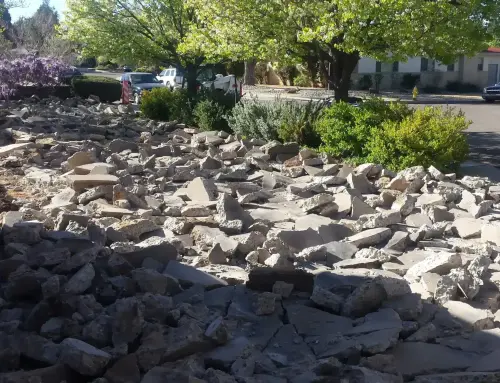
Much of Sandia Park and Tijeras sits directly on granite bedrock or decomposed granite. This is actually good news for foundations — granite doesn’t shift or settle the way clay does. But it creates significant excavation challenges. You can’t prep a granite substrate with a standard blade — you need the right equipment and the right technique. We’ve been breaking through East Mountain granite for 45 years. We know how to read it, work with it, and build a solid base on top of it.
Silty and Sandy Soils — Moriarty and Edgewood Plains
As you come down out of the mountains toward Moriarty and the Estancia Valley, the terrain flattens and the soil changes dramatically. The sandy, silty soils of the Edgewood and Moriarty plains are loose and require heavy compaction before any concrete pour. Skip that step and your driveway or patio will settle and crack within a few years. We compact in layers, verify the base is solid, and don’t pour until we’re confident the sub-grade will support the slab for decades.
Rural Sedillo — A Mix of Both Worlds
Sedillo sits between the rockier terrain around Tijeras and the flatter ground toward Moriarty, and the soil on any given Sedillo lot can lean either direction. Some properties have granite close to the surface, others sit on looser, sandier ground that needs the same compaction attention as Edgewood or Moriarty. We assess every Sedillo site individually rather than assuming which soil profile we’re going to find — the terrain here does not follow a single pattern the way some East Mountain communities do.
Expansive Clay Pockets
Throughout the East Mountains, you find pockets of clay soil — especially in lower areas and near arroyos. Clay is concrete’s worst enemy. It swells when wet and shrinks when dry, constantly moving under your slab. We identify clay pockets during site assessment and either remove and replace them with stable compacted base material or design drainage specifically to keep moisture away from those areas.
Freeze-Thaw Conditions
This is the big one in the East Mountains. At elevations between 6,000 and 7,500 feet, winter temperatures drop well below freezing regularly from October through April. We use air-entrained concrete mixes that trap tiny air bubbles throughout the slab — giving water somewhere to expand when it freezes instead of cracking the concrete from the inside. This is standard practice for us on every East Mountain job. For contractors who don’t know the mountains, it’s an afterthought — or not a thought at all.
Monsoon Season in the Mountains
East Mountain monsoons are intense. The terrain funnels water downhill fast. A poorly graded concrete job in the mountains doesn’t just look bad — it actively damages your property as water pools, erodes, and undermines your slab year after year. We grade every East Mountain job with monsoon drainage in mind. Water runs away from your structure. Every time.
📖 Further reading: Excavation & Dirt Grading Guide
Concrete Services We Provide in Edgewood & the East Mountains
We handle everything from excavation through the final seal on every East Mountain project. Here’s what that looks like in this terrain.
|
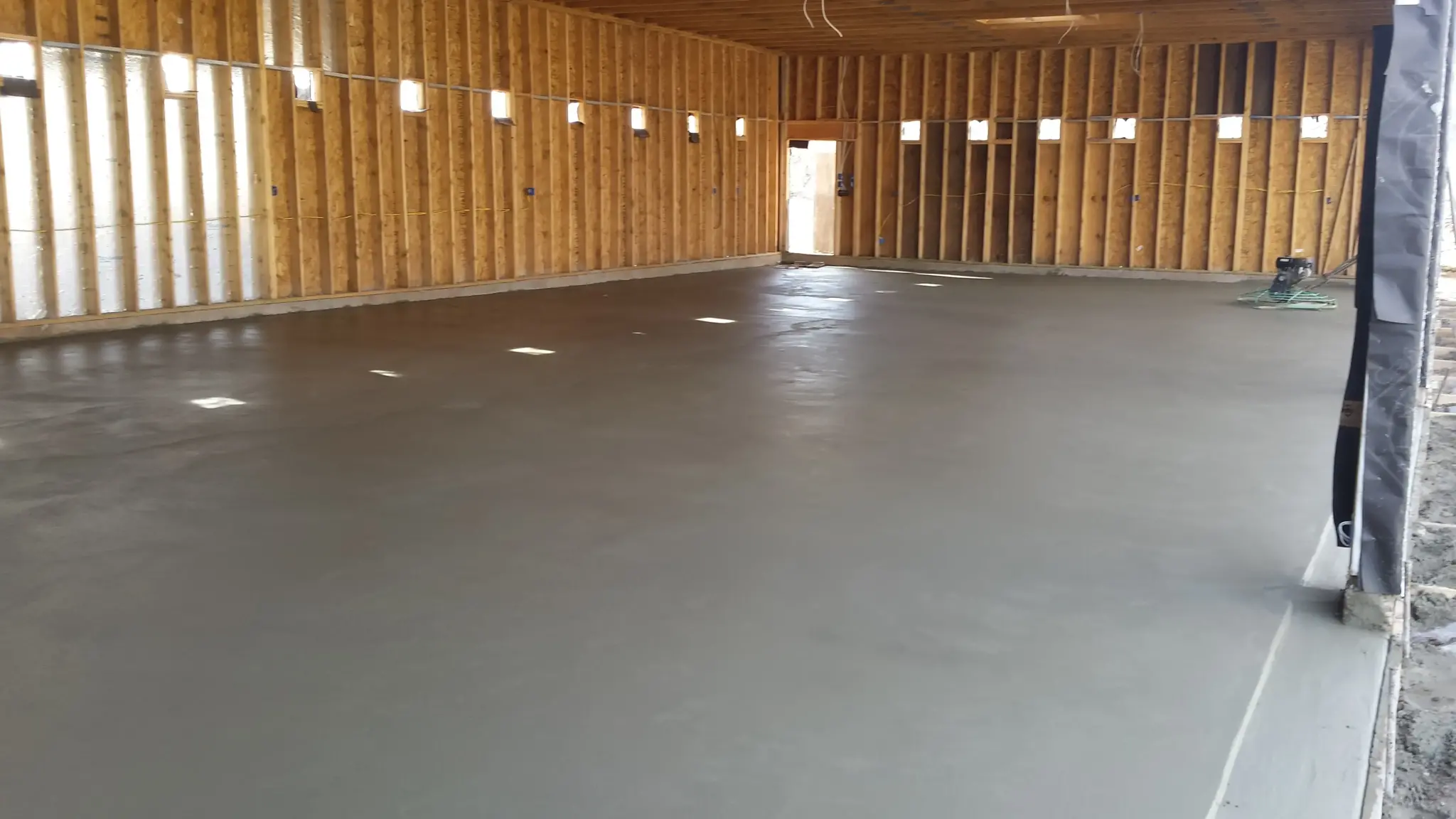
Most Requested 🏠 Concrete Foundations Custom homes in PAAKO, detached garages in Sandia Park, workshops in Edgewood and Sedillo. Frost-depth footings and moisture control built into every East Mountains foundation. See our foundations service page, our complete foundations guide, and our metal building slabs guide for shops and outbuildings. |
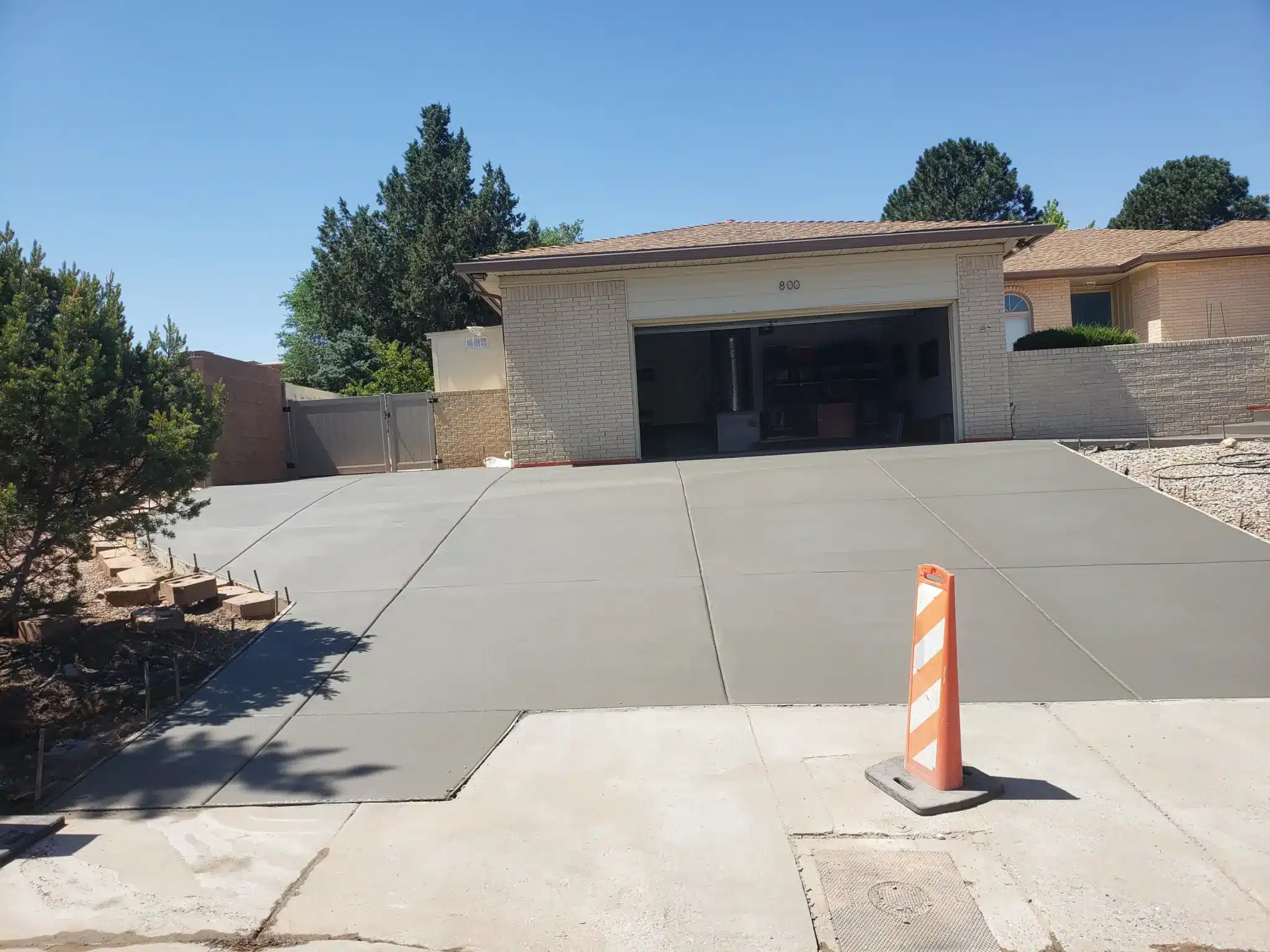
🚗 Concrete Driveways Built to handle heavy snow loads, repeated freeze-thaw, steep grades, and truck and trailer weight. Higher PSI mix, air entrainment, and monsoon-ready drainage. See our concrete driveways page and guide to a long-lasting driveway. |
|
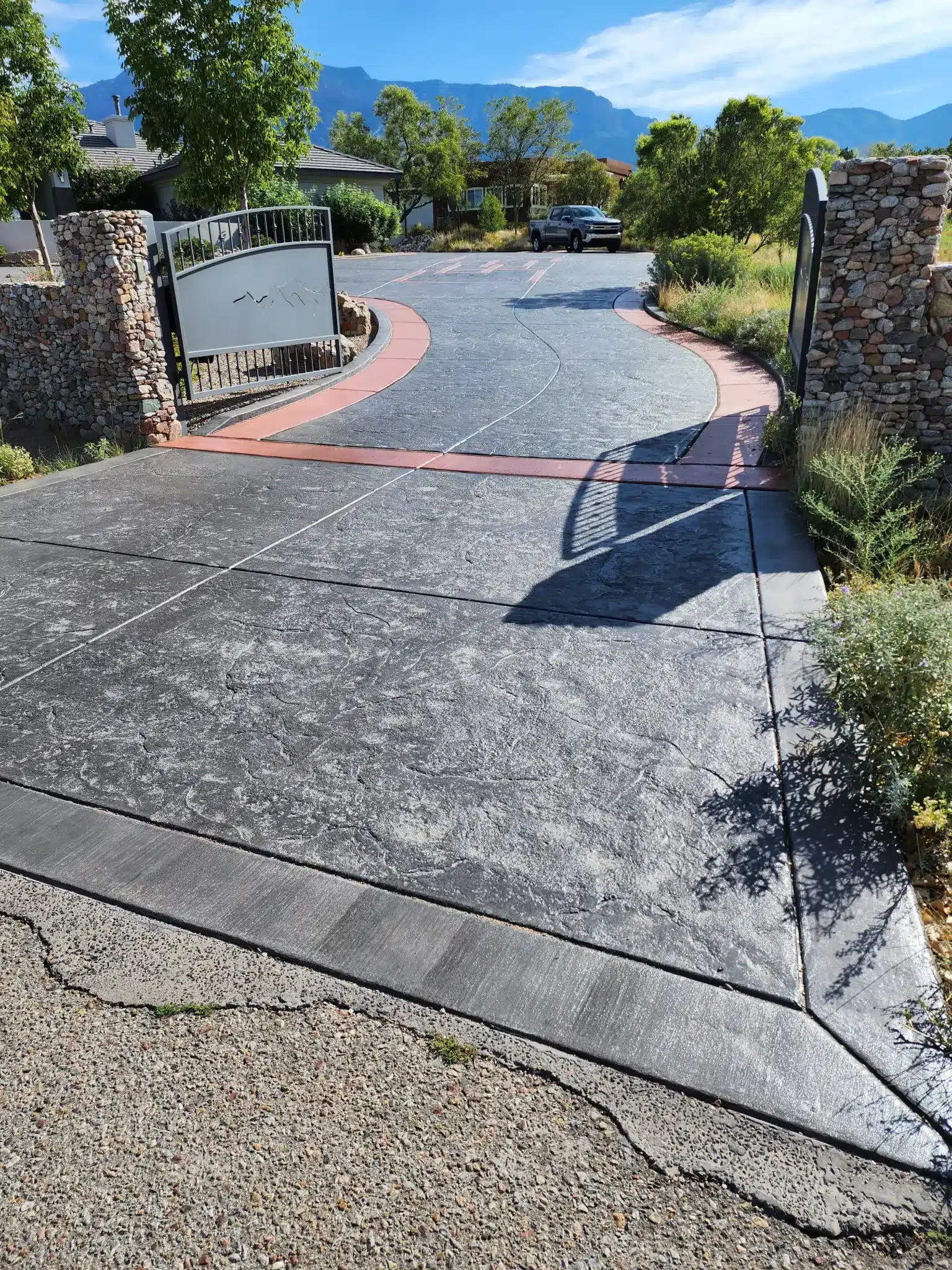
🎨 Stamped & Decorative Concrete Flagstone and Ashlar slate patterns that blend with the rocky terrain and pine landscape. Aggressive freeze-thaw rated sealing on every decorative East Mountains job. See our stamped concrete page and stamped patios and driveways guide. |
🧱 Retaining Walls Engineered for mountain soil pressure and moisture loads on steep East Mountain lots. Drainage designed in — a saturated hillside behind an undersized wall fails catastrophically. See our retaining walls page. |
|
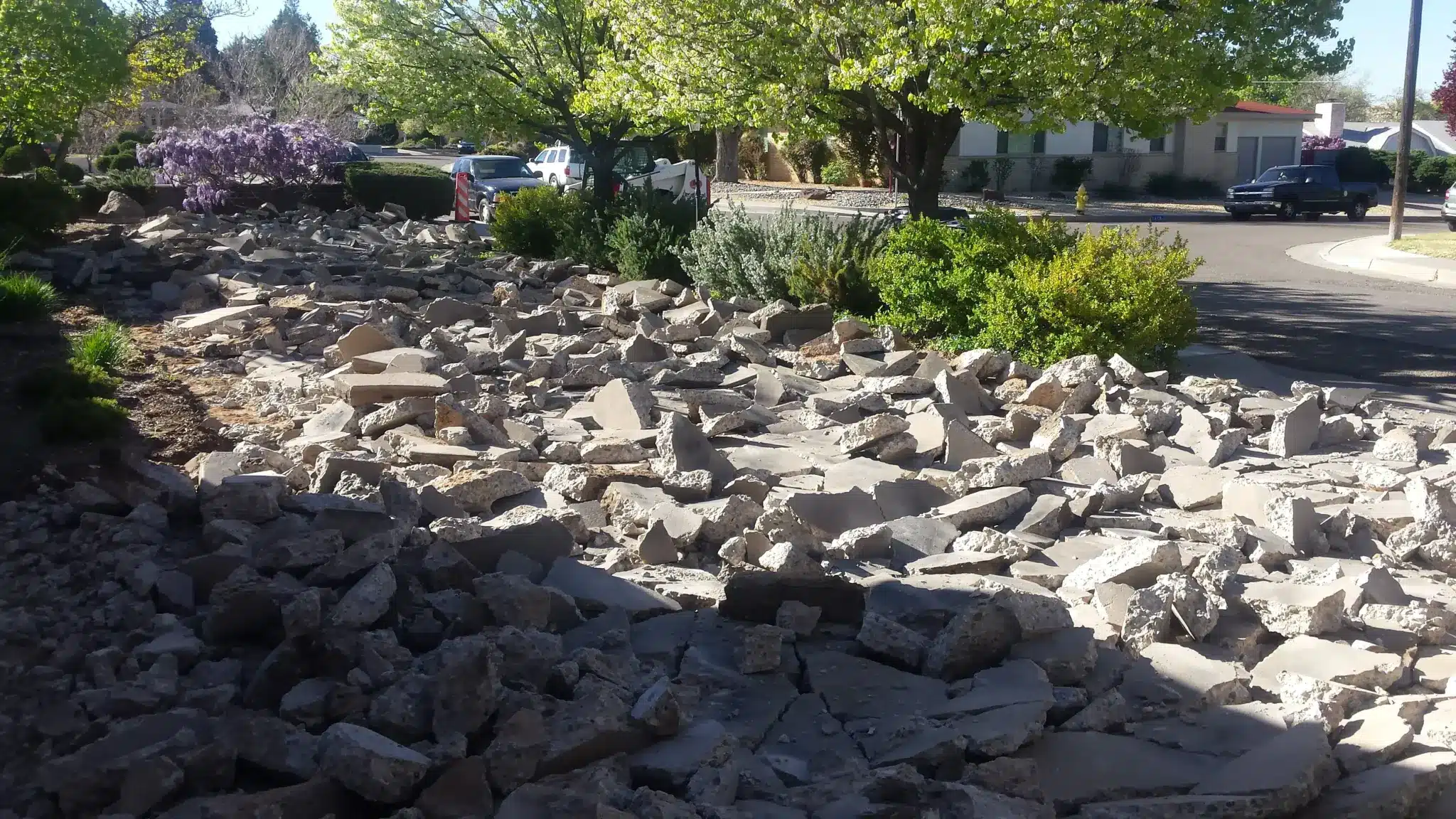
🔨 Demolition & Replacement Decades of freeze-thaw cycling heave and crack old East Mountain concrete beyond repair. We tear it out and haul it away with our own backhoe and Bobcat equipment. See our demolition page and demolition and replacement guide. |
🚜 Excavation & Site Prep Rocky substrate, steep grades, tight access roads, and unstable soil pockets — all handled with our own equipment, never subcontracted. See our excavation and dirt grading guide. |
Driveways in the East Mountains — What the Terrain Requires
An East Mountain driveway has to handle heavy snow loads, repeated freeze-thaw cycles, steep grades, and the weight of trucks and trailers that mountain property owners commonly use. We design driveways specifically for East Mountain conditions — higher PSI mix, air entrainment, thicker slabs where grades require it, and drainage that handles monsoon runoff without washing out the base.
🚗 East Mountains Driveway Standard Specifications:
- 5 to 6 inches thick — thicker on steep grades and heavy vehicle access
- 4,000–4,500 PSI air-entrained concrete — freeze-thaw resistance is not optional at this elevation
- #4 rebar on chairs — tied at intersections, never wire mesh
- Cross-slope drainage designed at forming — monsoon runoff and snowmelt directed off the surface
- Deep control joints — placed to manage freeze-thaw stress, not cut randomly
- Curing compound applied immediately after finishing — locks in moisture during the critical first days
- Freeze-thaw rated sealer on decorative surfaces — protects color and texture through mountain winters
We’ve built driveways in the East Mountains that have lasted 30, 40, even 50 years. The ones that crack and heave in five years were built by contractors who used a flat-land Albuquerque approach on mountain terrain. We don’t make that mistake.
📖 Further reading: Concrete Driveways Page | The Best Time to Repave Your Driveway | Driveway Replacement Guide
Foundations in the East Mountains
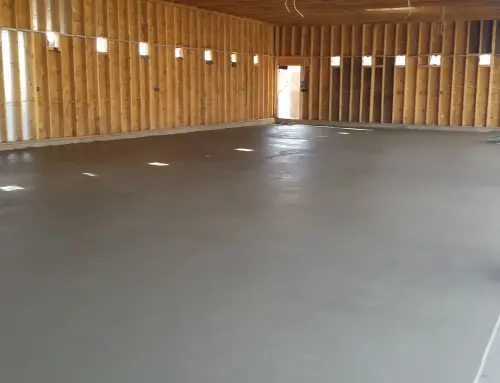
Whether you’re building a custom home in PAAKO, a detached garage in Sandia Park, or a workshop in Edgewood or Sedillo, your foundation is the most critical investment you’ll make. We’ve been pouring foundations in the East Mountains for 45 years. We know how deep footings need to go to clear the frost line, how to handle rocky substrate, and how to design a foundation that handles the specific soil conditions on your lot.
East Mountain foundations require extra attention to moisture barriers and vapor control — the freeze-thaw cycles mean moisture management is critical both above and below the slab. We never skip these steps. Not after seeing what happens when they’re ignored.
🏠 East Mountains Foundation Checklist — What Changes at Elevation:
- Footings excavated to 24–36 inches depending on elevation and location
- 4,000+ PSI air-entrained mix on every foundation, no exceptions
- Vapor barrier under all enclosed slabs — full footprint, lapped seams
- Granite or rocky sub-grade assessed during site visit — not discovered mid-job
- Moisture and drainage planning built into the grade before any forming begins
📖 Further reading: Concrete Foundations Service Page | Concrete Foundations in Albuquerque NM — Complete Guide
Stamped & Decorative Concrete in the East Mountains
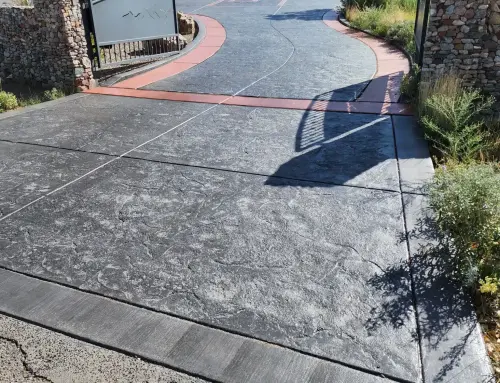
The natural beauty of the East Mountains makes decorative concrete a perfect fit. Flagstone stamped concrete blends beautifully with the rocky terrain and pine landscape. Ashlar slate works well on patios in Richland Hills and Sandia Park. We’ve been doing stamped concrete in the mountains long enough to know which patterns and colors complement the environment — and which ones look completely out of place.
In the East Mountains, stamped concrete needs aggressive sealing for freeze-thaw protection. A decorative slab that isn’t sealed correctly will lose its color and surface texture within a few winters. We use professional grade freeze-thaw rated sealers on every decorative East Mountain job.
📖 Further reading: Stamped Concrete Page | Stamped Concrete Patios & Driveways | Stamped Concrete Contractors Guide | Concrete Patios Guide | Driveways & Patios Guide
Freeze-Thaw Mix Design — Why It’s Non-Negotiable Up Here
STANDARD MIX VS. AIR-ENTRAINED FREEZE-THAW MIX
❌ STANDARD CONCRETE MIX AT 7,000 FEET
〰️ No entrained air · Water expands inside micro-cracks 〰️
Result: Surface scaling, cracking, and heaving within a few winters
↓ M&M Concrete — Air-Entrained Mix on Every East Mountains Pour ↓
✅ AIR-ENTRAINED, FREEZE-THAW RATED MIX
▬▬▬▬ Microscopic air voids absorb expansion ▬▬▬▬
Result: Concrete built to survive 50+ freeze-thaw cycles a year
Standard practice on every foundation, driveway, and patio we pour in Edgewood, Sedillo, Tijeras, PAAKO and Sandia Park
Air-entrained concrete is not an upsell we offer East Mountain clients — it is the baseline mix design for this elevation. Water expands roughly nine percent in volume when it freezes. In a standard mix with no entrained air, that expansion has nowhere to go except into the surrounding concrete, forcing micro-cracks wider with every freeze-thaw cycle until the surface scales, spalls, or the slab heaves outright. The entrained air bubbles give that expanding water somewhere to go, absorbing the pressure instead of transferring it into the concrete matrix. This is a well-documented concrete science principle, not a regional preference — but it only matters if the contractor actually specs it, and plenty of Albuquerque-based crews pour East Mountain jobs with valley-standard mix because that’s what they’re used to ordering.
📖 Further reading: Why Quality Site Prep Matters
Compaction — Why Sub-Grade Matters on Every East Mountains Project
COMPACTION STANDARD — 95% PROCTOR DENSITY
❌ UNCOMPACTED SUB-GRADE
〰️ Loose · Voids · Soft spots · No bearing capacity 〰️
Result: Settlement · Cracking · Failure within a few winters
↓ M&M Concrete — In-House Vibratory Compaction — ABQ Backhoe & Bobcat ↓
✅ COMPACTED TO 95% PROCTOR DENSITY
▬▬▬▬ Dense · Uniform · Verified Before Forming ▬▬▬▬
Result: Stable bearing layer · 30–50 year service life
All compaction handled in-house — M&M Concrete / ABQ Backhoe & Bobcat Services — never subcontracted
East Mountains sub-grade does not compact like the sandy loam common across the Albuquerque West Mesa. In Sandia Park and Tijeras, native granite and decomposed granite often provide a stable bearing surface on their own — an asset once we’ve confirmed how deep it runs and where it’s solid enough to build on directly. In Edgewood, Sedillo, and toward Moriarty, the sandy and silty soils are looser and require real compaction effort before anything gets poured on top of them. Where fill material is needed to establish consistent grade, it goes in at 6 to 8-inch lifts — compacted after each lift before the next one goes on.
The standard on every East Mountains project is 95% Proctor density across the full footprint — verified before any forming begins. This matters more here than in the valley, not less: a sub-grade that settles unevenly under a foundation or driveway compounds every freeze-thaw cycle that follows, turning a compaction shortcut into a multi-year failure instead of a one-time problem.
M&M Concrete handles all sub-grade preparation in-house through ABQ Backhoe & Bobcat Services. We never subcontract compaction and hope it was done right.
📖 Further reading: Why Quality Site Prep Matters for Every Concrete Project | Bobcat and Backhoe Services in Albuquerque
Excavation & Site Prep in the East Mountains
East Mountain terrain is demanding on equipment and operators. Rocky substrate, steep grades, tight access roads, and unstable soil pockets all require experienced heavy equipment operators who know this terrain. We bring our own backhoes and Bobcats to every East Mountain job. We don’t subcontract site prep — because site prep is where East Mountain concrete jobs succeed or fail.
✅ Site Prep Services We Handle In-House in the East Mountains:
- Foundation and driveway excavation — granite, decomposed granite, silty plains, whatever the site requires
- Land clearing — brush, scrub vegetation, and tree removal before grading. See our land clearing page
- Grading and compaction — rough grade and finish grade to correct elevation and drainage slope
- Debris and junk removal — old materials, construction debris, demolition waste hauled off. See our junk and debris removal page
- Erosion control — drainage swales, slope grading, and washout repair after monsoon damage
M&M Concrete — 45+ years — owns and operates our own excavation equipment through ABQ Backhoe & Bobcat Services. The same company doing the excavation pours the concrete — no coordination gap, no finger-pointing if the sub-grade comes in wrong. See our full service concrete contractor page for the complete scope we handle in-house.
📖 Further reading: Excavation & Dirt Grading Guide | Excavating Contractors Albuquerque & Rio Rancho | Bobcat and Backhoe Services | Dirt Work Albuquerque & Rio Rancho
Communities We Serve in the East Mountains
We’ve worked throughout the East Mountains for 45 years. Here’s where we work most often and what makes each community unique from a concrete standpoint.
- PAAKO — High-end custom homes and estates on rocky terrain. Precision foundations, stamped patios, and decorative driveways are common here. These clients expect perfection and we deliver it.
- Sandia Park — Granite substrate, pine forest terrain, steep grades. Foundations and driveways require specialized excavation and drainage planning. We know every road and every soil condition in Sandia Park.
- Tijeras — Canyon terrain with tight access and mixed soil conditions. Getting concrete trucks into Tijeras requires planning and experience. We’ve been doing it for decades.
- Sedillo — Rural East Mountain community between Tijeras and Moriarty with a mix of rocky and sandy soil conditions. Longer driveways, larger rural building pads, and property-specific soil assessment are the norm on every Sedillo project.
- Edgewood — The commercial and residential hub of the East Mountains. Varied terrain from rocky hills to flat plains. We handle everything from large commercial slabs to residential driveways and patios.
- Moriarty — Flat, open terrain with sandy silty soils. Compaction and base preparation are critical here. Large driveways and agricultural slabs are common projects.
- Richland Hills — Residential community with a mix of soil types. Stamped patios and driveways are popular here. We know the neighborhood well.
- Cedar Crest — Mountain residential with significant elevation. Freeze-thaw conditions are severe here — we design every project accordingly.
- Estancia Valley — Agricultural and rural residential. Large slabs, equipment pads, and long driveways are common. We have the equipment to handle large rural projects efficiently.
Beyond the East Mountains
- Albuquerque — Our home base since the 1970s. All neighborhoods, all concrete services. See our Albuquerque concrete contractors page.
- Placitas — Similar rocky, hillside terrain to the East Mountains with its own elevation and drainage considerations.
- Santa Fe — Freeze-thaw engineered concrete for Northern NM conditions, similar to what we spec throughout the East Mountains.
- Rio Rancho — Full concrete services throughout Rio Rancho’s residential and commercial areas.
- Los Lunas & Valencia County — Residential and agricultural concrete throughout Valencia County.
Commercial and large-scale jobs throughout the region are also part of our regular scope — see our commercial concrete contractors page for warehouse, retail, and tilt-up work. Want to see the finished product before you call? Browse our project gallery or read more about M&M Concrete.
2026 Concrete Pricing in Edgewood & the East Mountains
East Mountain concrete work costs slightly more than Albuquerque — the terrain, elevation, access challenges, and material requirements all add modest cost to mountain projects. Here’s what to expect in 2026.
| Service | Specification | Est. East Mountains Range |
|---|---|---|
| Concrete driveway (standard) | 5–6″ thick, air-entrained mix | $7 – $14 / sq ft |
| Driveway (single car ~400 sq ft) | Includes base prep and sealing | $2,800 – $5,600 |
| Driveway (two car ~600 sq ft) | Includes base prep and sealing | $4,200 – $8,400 |
| Concrete patio (standard) | Drainage graded for mountain runoff | $7 – $14 / sq ft |
| Stamped concrete (single pattern) | Freeze-thaw rated sealer included | $13 – $21 / sq ft |
| Stamped concrete (multi-pattern) | Premium finish for custom properties | $21 – $29 / sq ft |
| Concrete foundation (residential) | Deep frost footings, rocky excavation | $8,000 – $20,000 |
| Retaining walls | Engineered for mountain soil pressure | $50 – $100 / linear ft |
| Concrete demolition & removal | Rocky terrain adds excavation cost | $3 – $8 / sq ft |
| Debris & concrete haul-off | May vary with access difficulty | $500 – $850 / load |
| Backhoe / Bobcat services | Operator included | $135 – $175 / hour |
These are honest numbers for East Mountain projects in 2026. Rocky excavation, steep grades, access challenges, and freeze-thaw mix requirements can all affect final pricing. Call M&M Concrete at (505) 550-0418 — we’ll assess your specific site and give you a straight number before we start.
📖 Full pricing: Concrete Contractor Costs — Full 2026 Price Guide
How to Choose a Concrete Contractor in the East Mountains
The East Mountains attract contractors from Albuquerque who see a job and figure concrete is concrete wherever you pour it. It’s not. Here’s how to find someone who actually knows what they’re doing up here.
✅ Questions to Ask Any East Mountains Concrete Contractor:
- Ask specifically about East Mountain experience. Not just general concrete experience — East Mountain experience. Ask how many jobs they’ve done in Sandia Park, Tijeras, Sedillo, or Edgewood. If they can’t give you specifics, they’re learning on your dime.
- Ask about frost depth. Any legitimate East Mountain contractor knows exactly how deep footings need to go at your elevation. If they give you a vague answer or quote Albuquerque depth, walk away.
- Ask about their concrete mix for freeze-thaw conditions. Standard concrete mix is not adequate for East Mountain winters. You need air-entrained concrete specifically designed for freeze-thaw resistance. If they’re not bringing this up themselves, they don’t know mountain concrete.
- Ask about access and logistics. Getting a concrete truck to a steep mountain property is a real challenge. An experienced East Mountain contractor has dealt with it and can tell you exactly how they’ll handle your access situation.
- Ask who handles the site prep. Do they own their own equipment or subcontract? In the East Mountains, site prep is everything — subcontracted site prep on mountain terrain is a recipe for problems.
- Get everything in writing. Concrete mix specs, footing depth, joint placement, drainage plan, sealer type — all of it in the contract. A contractor who won’t commit to specifics in writing is a contractor who won’t deliver them.
📖 Further reading: Why Quality Site Prep Matters | M&M Concrete — Concrete Contractors Albuquerque
Frequently Asked Questions — East Mountains Concrete
How much does a concrete driveway cost in Edgewood or the East Mountains?
A standard concrete driveway in the East Mountains runs $7 to $14 per square foot in 2026. A typical single car driveway (400 sq ft) costs between $2,800 and $5,600. A two car driveway (600 sq ft) runs between $4,200 and $8,400. East Mountain pricing is slightly higher than Albuquerque due to freeze-thaw mix requirements, rocky excavation, and access considerations. See our full 2026 pricing guide for complete breakdowns.
Does concrete crack more in the East Mountains than Albuquerque?
It does — if the contractor doesn’t account for mountain conditions. The more severe freeze-thaw cycles, rocky substrate, and steep drainage challenges all create more stress on concrete than flat Albuquerque terrain. Properly designed concrete with the right mix, correct footing depth, proper joints, drainage planning, and quality sealing lasts just as long in the mountains as anywhere else. The key is hiring someone who actually knows East Mountain conditions.
When is the best time to pour concrete in the East Mountains?
Late spring through early fall — May through September — is ideal for East Mountain concrete work. You want to avoid pouring when temperatures drop below 40°F because cold slows curing and can damage fresh concrete. In the East Mountains that window is shorter than Albuquerque — frosts can come as early as October and as late as May at higher elevations. Plan your project for the warmer months when possible for best results and pricing.
Can you get concrete trucks into steep or remote East Mountain properties?
Yes — but it requires planning. We assess every East Mountain site before committing to a pour plan. Some properties require pump trucks to move concrete from the road to the pour site. Some require coordinating with the county on road access. After 45 years working up here, we’ve encountered every access challenge the East Mountains can throw at us — and we know how to solve them.
Do you need a permit for concrete work in Edgewood or the East Mountains?
It depends on the project and the jurisdiction. Bernalillo County, Torrance County, and Santa Fe County all have different requirements. Foundations and structural concrete almost always require permits. Driveways and patios may or may not depending on size and location. We help our East Mountain clients understand what’s required for their specific project and jurisdiction before we start.
How deep do footings need to be in the East Mountains?
The frost line in the East Mountains is deeper than Albuquerque — typically 24 to 36 inches depending on elevation and location. A contractor who quotes you Albuquerque footing depths for an East Mountain foundation is setting you up for failure. We know exactly how deep to go at every elevation in our service area.
Do you serve Sedillo?
Yes. Sedillo is a regular service area for M&M Concrete. The community sits in a transition zone between the rockier terrain around Tijeras and the flatter ground toward Moriarty, so we assess each Sedillo property’s soil individually rather than assuming which conditions we’ll find. Foundations, driveways, and rural building pads are all common projects out this way.
Do you serve Moriarty and the Estancia Valley?
Yes. We serve the entire East Mountains region including Moriarty, Estancia, Willard, Sedillo, and the Estancia Valley. The flat terrain and agricultural properties in that area have different concrete needs than the rocky mountain terrain — and we handle both. Call us at (505) 550-0418 to discuss your specific location.
How do I get a free estimate for concrete work in the East Mountains?
Call us at (505) 550-0418 or request an estimate online at abqconcrete.com. We come out to your site, assess the terrain and soil conditions, and give you a straight number. No pressure, no gimmicks — just an honest quote from a contractor who actually knows the East Mountains.
Get a Free Concrete Estimate in Edgewood or the East Mountains
If you’re ready to start a concrete project in Edgewood, Sedillo, Tijeras, PAAKO, Sandia Park, Moriarty, or anywhere in the East Mountains — talk to the crew that’s been working up here for 45 years. We know the terrain, we know the soil, we know the climate, and we know how to build concrete that survives East Mountain winters and lasts for decades.
Don’t hire a contractor who’s going to figure out mountain concrete on your property. Call the team that already knows it.
Concrete Contractors — Edgewood, Sedillo, Tijeras & the East Mountains
M&M Concrete — 45+ Years & Still Pouring
Driveways · Foundations · Stamped Concrete · Retaining Walls · Excavation · Demolition
Locally owned. Family operated. Licensed, bonded & insured. Mountain terrain expertise.
abqconcrete.com | (505) 550-0418 | Serving Edgewood, Sedillo, Tijeras, PAAKO, Sandia Park, Moriarty, Richland Hills, Cedar Crest & all of the East Mountains