abqconcrete.com | Free Estimates — Albuquerque, Rio Rancho, Santa Fe & Central New Mexico
M&M CONCRETE — CONCRETE DRIVEWAY REPLACEMENT ALBUQUERQUE | RIO RANCHO
45+ Years Licensed & Operating in New Mexico | (505) 550-0418 | abqconcrete.com
🚗 Demolition · Sub-Grade Correction · 4,000 PSI Concrete · Fiber & Rebar Reinforcement · Free Estimates
Table of Contents
- Why Driveway Replacement Looks Different in Albuquerque, Rio Rancho, and Santa Fe
- Case Study — 1,600 Sq Ft Driveway Replacement, Four Hills, Albuquerque
- Every Type of Driveway Replacement We Handle
- Why Driveways Fail — By City, Not Just By Age
- Sub-Grade & Compaction — Where Every Replacement Succeeds or Fails
- Mix Design & Reinforcement — Matched to the Climate
- One Crew — Demolition Through the Final Pour
- Areas We Serve
- Driveway Replacement Pricing
- Frequently Asked Questions
- Get a Free Driveway Replacement Estimate
If you’re comparing concrete contractors Albuquerque-wide for a driveway replacement, this guide covers something most quotes skip entirely — how the right replacement actually changes depending on which of these three cities your driveway sits in.
Why Driveway Replacement Looks Different in Albuquerque, Rio Rancho, and Santa Fe
Most driveway replacement quotes read the same no matter where the property sits — demo the old slab, pour a new one, done. That approach misses something we’ve learned over 45 years working this exact region: a driveway that fails in Four Hills doesn’t fail for the same reason as one in Rio Rancho, and a replacement built for Albuquerque’s soil isn’t automatically built right for Santa Fe’s winters.
This guide walks through what actually changes — sub-grade, mix design, reinforcement, and finish decisions — when you replace a driveway in each of these three markets, plus a real 1,600 square foot replacement job we just finished in Four Hills.
M&M Concrete has replaced driveways throughout central New Mexico for more than 45 years. If you want the deeper dive into the specific warning signs and failure mechanisms behind a single Albuquerque driveway, our original driveway replacement Albuquerque guide covers that in detail. This page is the wider view — what changes across the three markets we serve most, and what a real replacement job looks like from demo day to the final pour.
Three Cities, Three Different Starting Points
✅ What Actually Changes by Location
- Albuquerque — Caliche and sandy loam vary block to block; salt damage and decades-old slabs without control joints are common in older neighborhoods
- Rio Rancho — Sandy West Mesa soil needs heavier compaction and moisture conditioning before any decorative or structural pour
- Santa Fe — Higher elevation means deeper frost depth and more severe freeze-thaw cycling, which changes air entrainment and joint spacing
We’ve been doing this for 45 years across all three markets. The mix design, the compaction standard, and the reinforcement plan all get adjusted for where the driveway actually sits — not treated as one generic pour.
Case Study — 1,600 Sq Ft Driveway Replacement, Four Hills, Albuquerque
REAL PROJECT · FOUR HILLS, ALBUQUERQUE · M&M CONCRETE
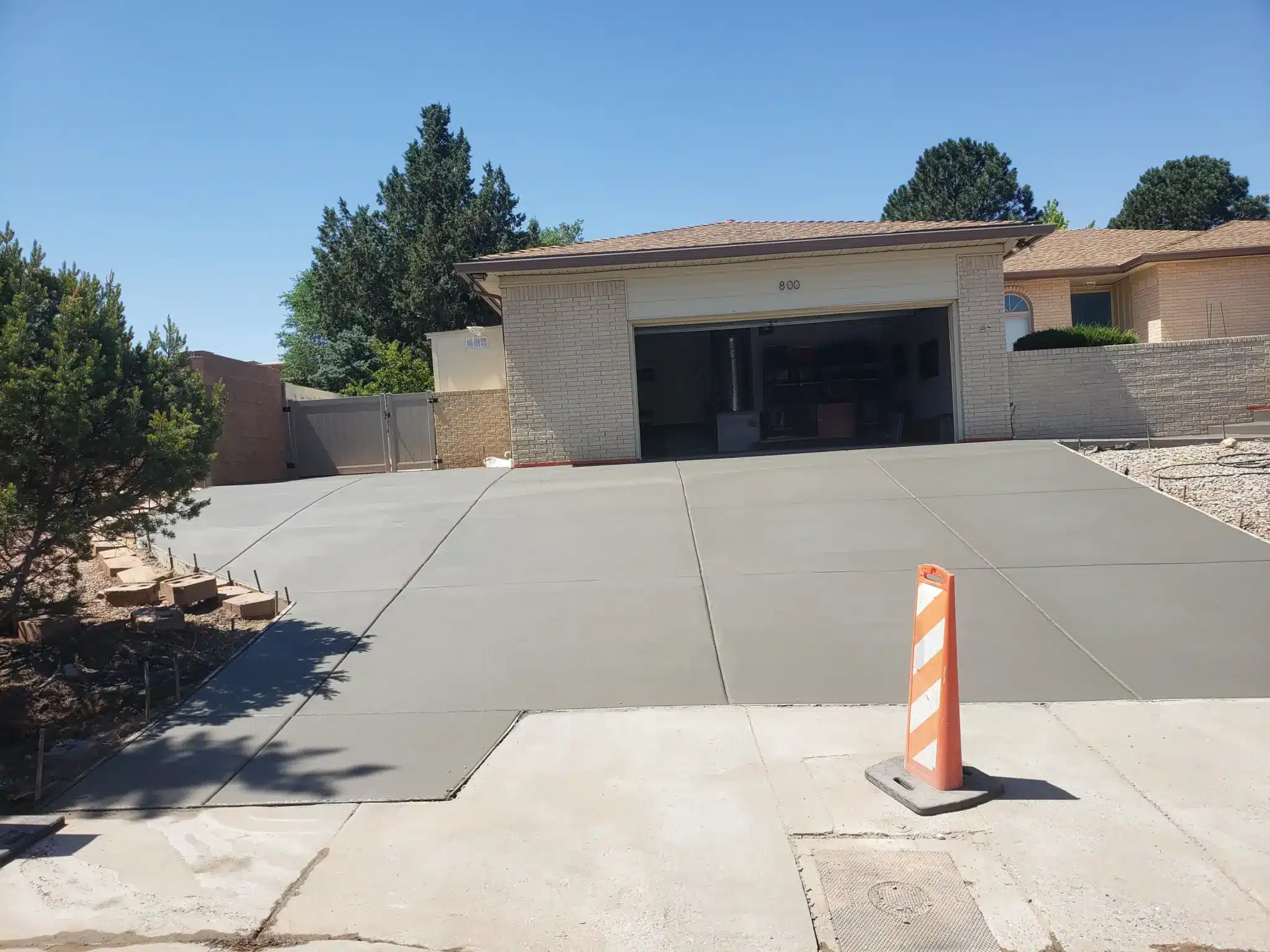
1,600 Sq Ft Driveway — Full Demolition & Replacement
Residential · Four Hills, Albuquerque · 40+ year old slab, salt damage, no control joints
1,600
Sq Ft Replaced
40+
Years Old — Original Slab
3
Days Start to Finish
4″
Slab Thickness
Fiber
Reinforcement
Broom
Finish
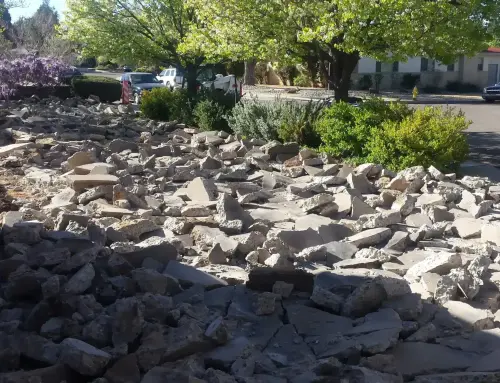
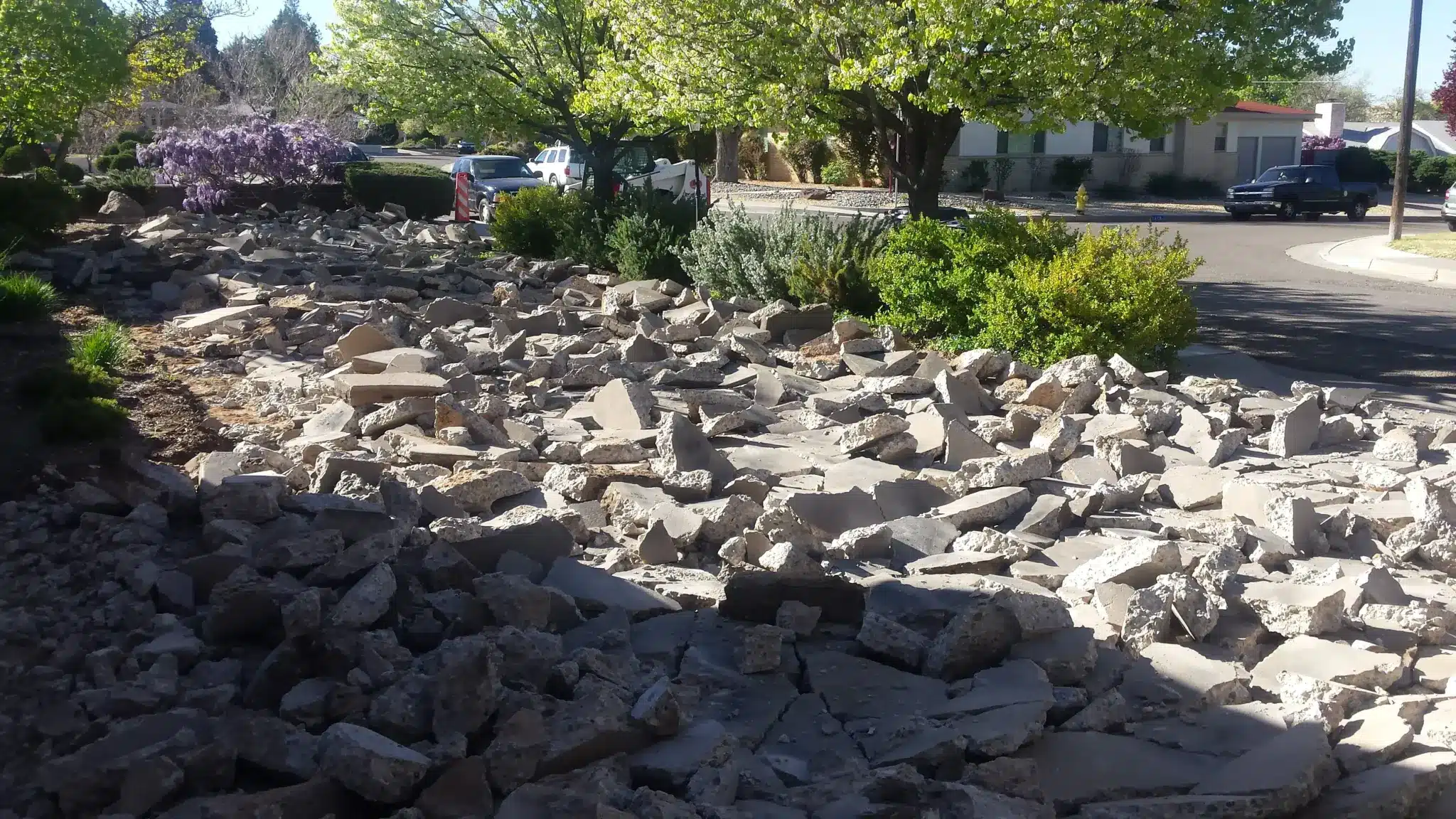
This Four Hills driveway was over 40 years old, and it looked it. Salt damage had eaten into the surface over decades of winter de-icing, and the original slab had been poured without control joints — so instead of cracking in clean, planned lines, it had split wherever thermal stress happened to find a weak spot. On top of that, the original compaction under the slab was inadequate, which meant the driveway had settled unevenly on top of everything else working against it.
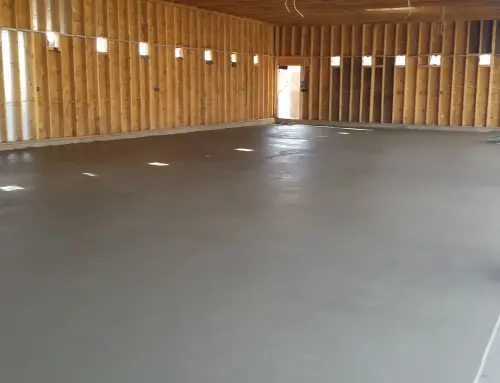
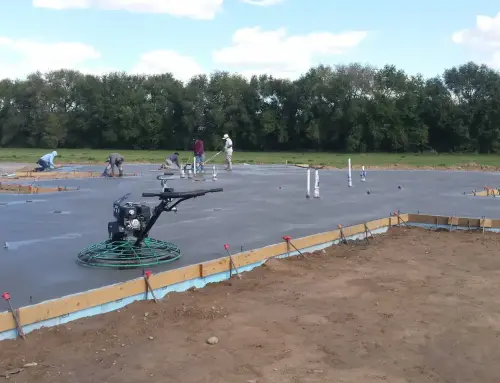
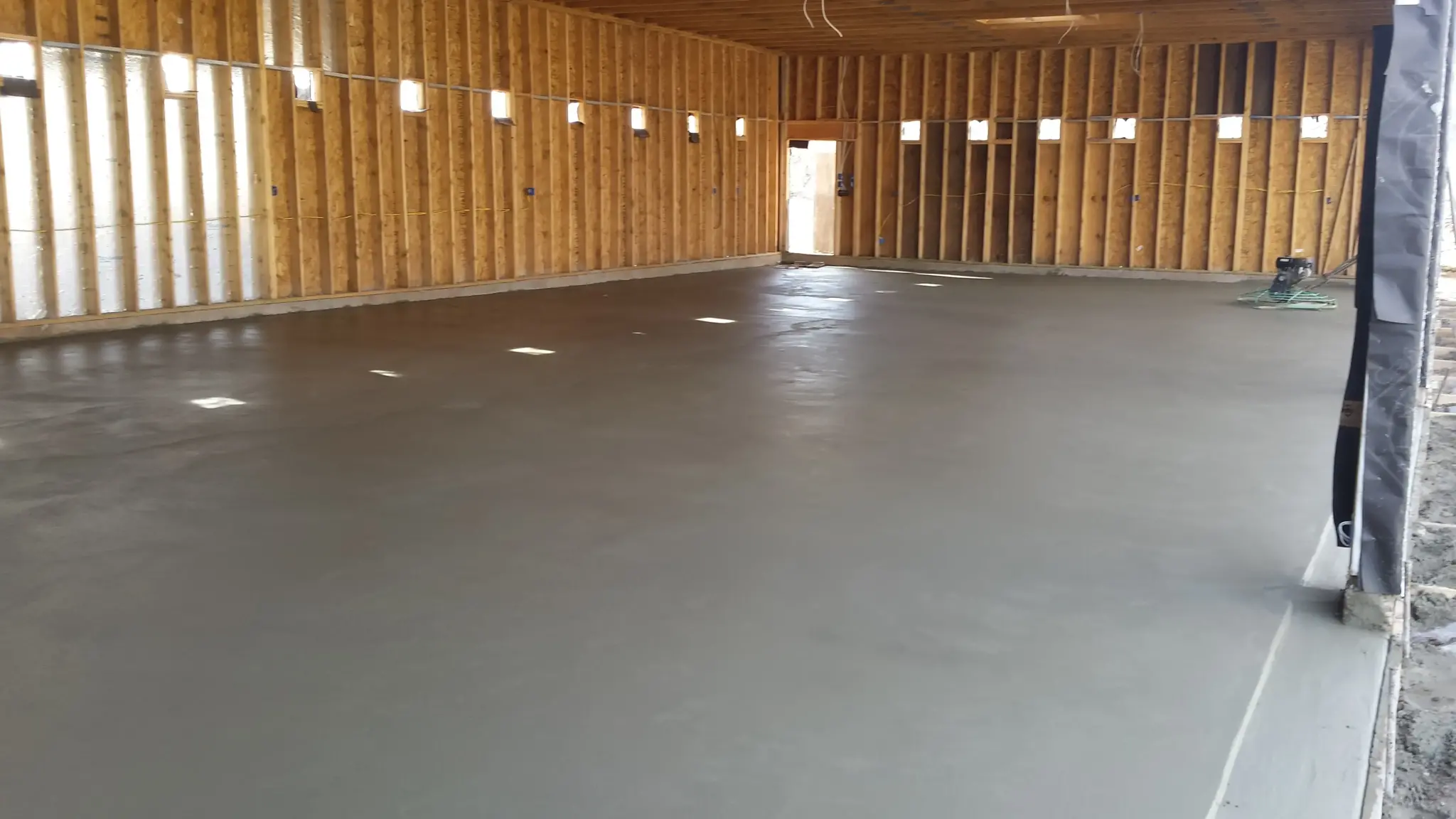
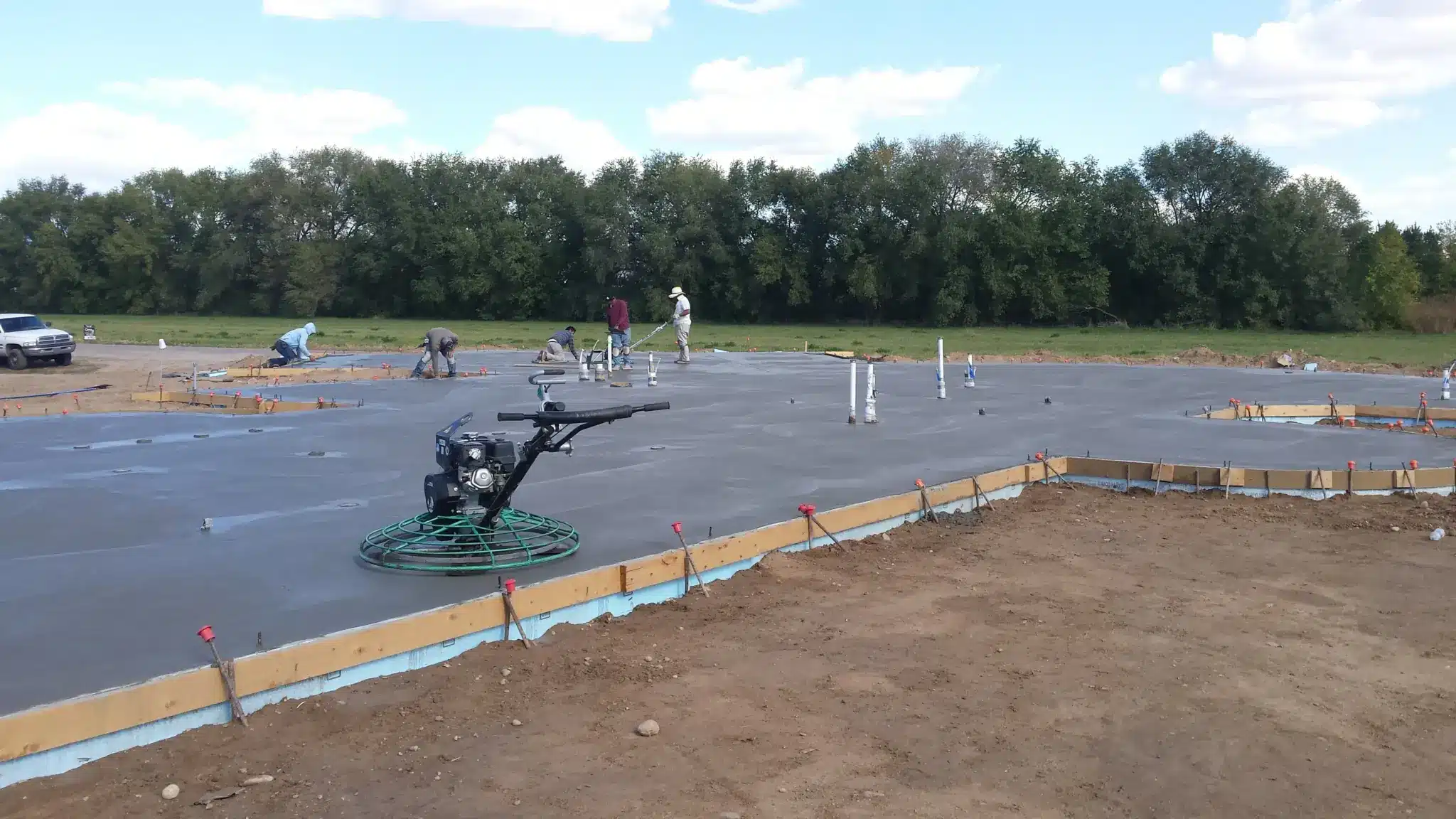
We demolished and hauled off the full 1,600 square feet, corrected the sub-grade, and poured a new 4-inch slab with synthetic fiber reinforcement and a standard broom finish. The whole job — demolition through the finished pour — was completed in three days.
Key specifications: 1,600 sq ft total · 4″ slab thickness · fiber reinforcement · broom finish · sub-grade corrected and compacted before pour · 3-day completion.
Why This One Failed the Way It Did
Salt damage and missing control joints are a specific combination, and they tell a specific story. Decades of winter de-icing salt breaks down the surface paste of concrete over time, which is a slow, cosmetic-looking problem right up until it isn’t. Without control joints cut into the original pour, the slab had no planned weak points to crack along — so as salt damage weakened the surface and the sub-grade settled underneath it, the driveway cracked in whatever pattern the stress happened to find, rather than in clean, hidden lines. That’s the difference between a driveway that ages gracefully and one that looks like this one did after four decades.
Why Fiber Instead of Rebar on This Job
This replacement used synthetic fiber reinforcement rather than rebar. Fiber reinforcement distributes micro-crack resistance throughout the entire slab rather than concentrating tensile strength along a rebar grid, and for a standard 4-inch residential driveway carrying passenger vehicle loads, it’s a legitimate and commonly used approach. It isn’t the same reinforcement strategy we’d spec for a heavier-load driveway or a thicker structural slab, where chaired rebar is still the right call — the reinforcement plan should match the actual load the driveway needs to carry, not default to the same spec on every job regardless of use.
Every Type of Driveway Replacement We Handle
Not every driveway replacement starts from the same problem or ends at the same finish. Here’s the full range of replacement work we do across Albuquerque, Rio Rancho, and Santa Fe.
Every Replacement Type at a Glance
- Standard full replacement — Complete demolition and repour, the most common driveway replacement scope.
- Root-damaged replacement — Full root removal before repour, common in older North Valley and Corrales properties.
- Salt and freeze-damaged replacement — Correcting decades of de-icing damage and missing control joints, like the Four Hills case study above.
- RV and oversized driveway replacement — Heavier mix design and tighter rebar spacing for larger vehicles and equipment.
- Decorative upgrade replacement — Replacing a plain slab with stamped, colored, or exposed aggregate finish.
- Partial replacement — Replacing a failed section while leaving structurally sound concrete in place, where that’s actually the right call.
Service Details
Most Requested
🚗 Standard Full Replacement
Complete demolition, sub-grade correction, and repour to 4,000 PSI. See our concrete driveways page and our driveway installation guide.
🌳 Root-Damaged Replacement
Complete root removal before the new pour goes in, so the replacement doesn’t heave the same way the original did within a few years.
❄️ Salt & Freeze-Damaged Replacement
Correcting decades of de-icing salt damage and missing control joints, with proper joint spacing built in this time.
🚙 RV & Oversized Driveway Replacement
Heavier mix design and tighter reinforcement spacing for RVs, trailers, and heavy equipment loads.
🎨 Decorative Upgrade Replacement
Since demo and base prep costs are already part of the project, replacement is a natural time to upgrade the finish. See our stamped concrete contractors page and our stamped concrete patios and driveways guide.
🔨 Partial Replacement
Replacing a failed section while leaving sound concrete in place, when that’s honestly the right call for your driveway. See our demolition and replacement guide.
If a full tear-out isn’t what your driveway needs, our concrete demolition contractors page and demolition and removal page cover standalone demolition scope as well.
Why Driveways Fail — By City, Not Just By Age
Age is part of the story, but it’s not the whole story. A 20-year-old driveway in one part of the metro can be in worse shape than a 40-year-old driveway somewhere else, because what’s actually causing the failure differs by location.
Albuquerque
Albuquerque’s biggest variable is how much the soil changes block to block. Caliche depth, sandy loam, and fill material can all show up on the same street, and a driveway poured without accounting for the specific lot’s soil is a driveway waiting to settle unevenly. In older established neighborhoods — North Valley, Four Hills, the Heights — we also see decades-old slabs poured without control joints or proper reinforcement, the way the Four Hills case study above played out, plus root intrusion from mature Cottonwoods and Elms.
Rio Rancho
Rio Rancho’s West Mesa soil is predominantly sandy, which drains well but compacts differently than Albuquerque’s mixed soil types. Many Rio Rancho driveways from the early-2000s building boom are now reaching replacement age, and the ones failing early are almost always tracing back to inadequate compaction during that original construction wave rather than any single dramatic cause.
Santa Fe
Santa Fe sits at a meaningfully higher elevation than Albuquerque or Rio Rancho, which means deeper frost depth and far more freeze-thaw cycling through a New Mexico winter. A driveway mix and joint plan that holds up fine in Albuquerque can spall and crack faster in Santa Fe if the air entrainment and control joint spacing weren’t adjusted for that colder, harsher cycle.
Whatever the specific cause, our driveway replacement Albuquerque guide walks through the full list of failure signs — cracks wider than a quarter inch, heaving, settling, spalling — in more depth if you want to diagnose your specific driveway before calling.
Sub-Grade & Compaction — Where Every Replacement Succeeds or Fails
A driveway replacement is a chance to fix everything wrong with the original installation, and almost all of that fixing happens before any concrete goes down.
The Anatomy of a Properly Rebuilt Driveway
DRIVEWAY REPLACEMENT — LAYER DIAGRAM
🔩 REINFORCEMENT — REBAR OR FIBER, MATCHED TO THE LOAD
CONCRETE SLAB — 4,000+ PSI, AIR-ENTRAINED
Control joints cut every 8–10 feet
🪨 BASE COURSE — MINIMUM 4 INCHES CRUSHED GRAVEL
🪨 COMPACTED SUBGRADE — 95% PROCTOR DENSITY — VERIFIED BEFORE POUR
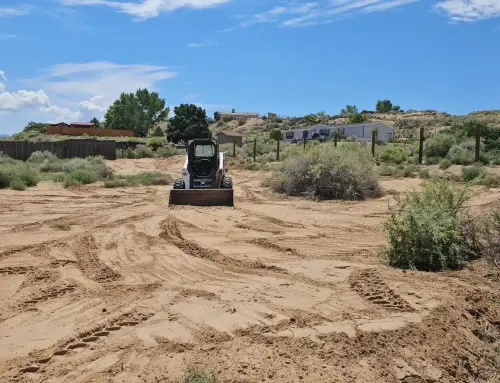
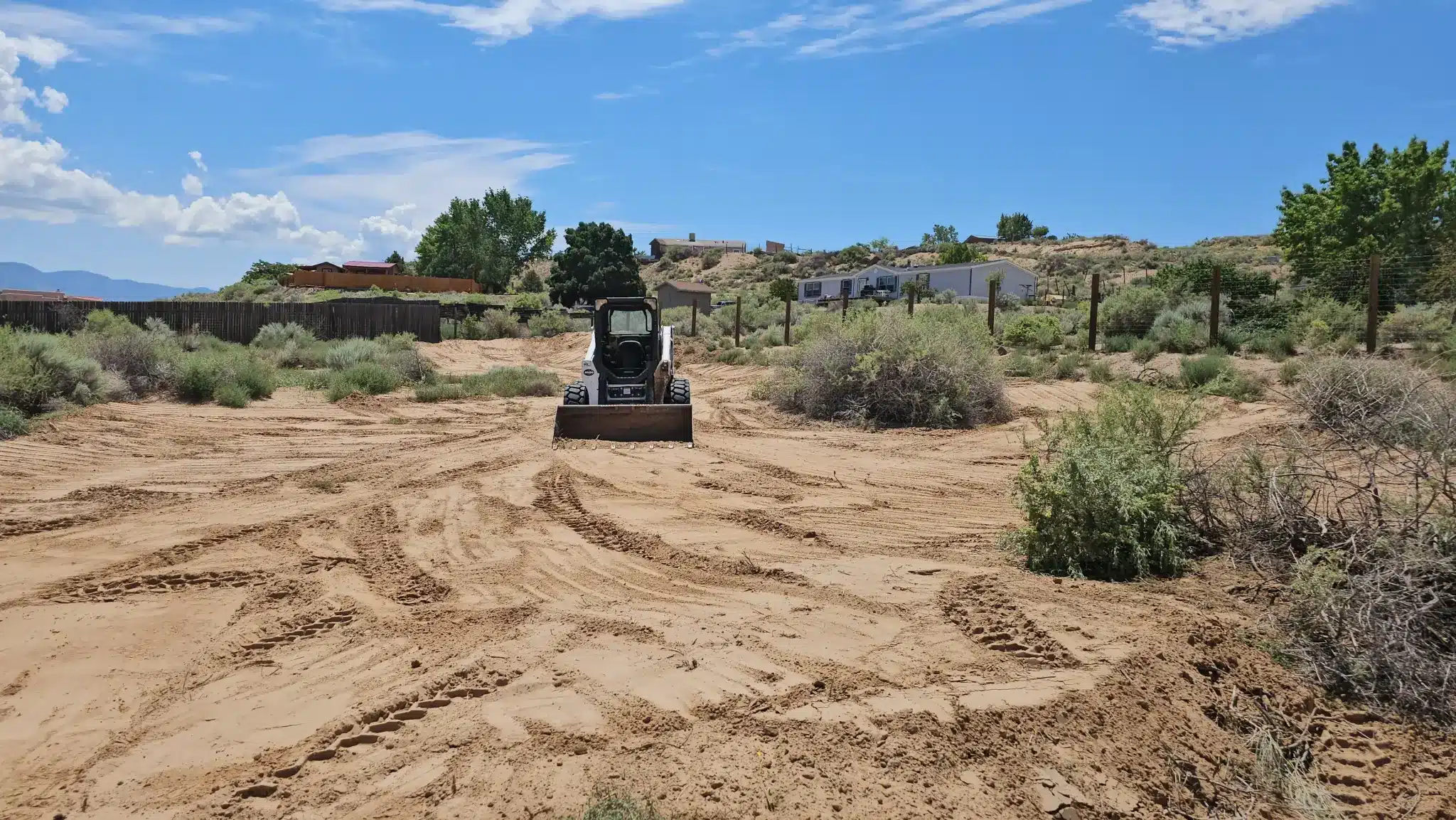
We demolish and haul off the existing slab using our own backhoe and Bobcat equipment, then assess what’s actually underneath — clay pockets, caliche depth, soft spots, root systems. Every one of those gets addressed before a base course goes in, and the base gets compacted to 95% Proctor density and verified before we form anything. Our why quality site prep matters page covers this same standard in more depth.
Why We Don’t Skip This Step to Save a Day
It would be faster to skip straight from demolition to forming, and a homeowner watching from the porch wouldn’t necessarily know the difference on day one. The difference shows up in year three or four, when a rushed sub-grade lets the new slab settle the same way the old one did. The whole point of replacement is fixing what caused the original failure — skipping the sub-grade assessment just delays the same problem into the future at the homeower’s expense.
Mix Design & Reinforcement — Matched to the Climate
4,000 PSI air-entrained concrete is our baseline across all three markets, but the details underneath that baseline shift depending on where the driveway sits and what it needs to carry.
Reinforcement — Rebar vs. Fiber
Standard residential driveways can be reinforced with #3 or #4 deformed rebar on 16 to 18-inch centers, properly chaired so it sits in the middle third of the slab rather than resting on the dirt. Synthetic fiber reinforcement, like we used on the Four Hills case study above, is a legitimate alternative for standard-load residential driveways — it distributes crack resistance three-dimensionally through the mix rather than along a grid. RV parking, heavy truck access, and oversized driveways still call for rebar on tighter spacing; we’ll tell you honestly which approach fits your specific driveway rather than defaulting to whichever is easier to schedule.
Control Joints — By City
Control joints tell concrete where to crack, invisibly, instead of letting thermal stress pick the spot. We cut joints every 8 to 10 feet on standard driveways across all three markets, but Santa Fe’s harsher freeze-thaw cycling means we hold to tighter, more consistent spacing there — a joint plan that’s adequate in Albuquerque can leave too much unsupported span for Santa Fe’s colder swings.
Air Entrainment — Non-Negotiable at Elevation
Air-entrained concrete contains microscopic air bubbles that give freezing water somewhere to expand into, instead of spalling the surface. We use air-entrained mixes on every driveway replacement across Albuquerque, Rio Rancho, and Santa Fe, with Santa Fe’s mix design leaning on it more heavily given the more severe and frequent freeze-thaw cycling at that elevation.
One Crew — Demolition Through the Final Pour
A driveway replacement usually means demolition, haul-off, sub-grade correction, and a new pour — four phases that go sideways when they’re handled by separate contractors who never talk to each other.
M&M Concrete and ABQ Backhoe & Bobcat Services handle every phase with our own crew and equipment. On the Four Hills case study above, that meant demolition through the finished pour in three days — not weeks of coordinating separate vendors and re-explaining site conditions each time.
Areas We Serve
We replace driveways throughout central New Mexico. Each area’s soil and climate shape the replacement plan, as covered above — here’s where we work.
- Albuquerque — All neighborhoods. See our concrete contractors in Albuquerque page and the residential concrete contractors in Albuquerque guide.
- North Albuquerque Acres & Sandia Foothills — Large driveways on granite terrain, often needing root management from mature landscaping.
- North Valley & Corrales — Cottonwood root intrusion is common here. See our concrete contractors in Corrales page.
- Rio Rancho — Sandy West Mesa soil requiring heavier compaction. See our Rio Rancho concrete services page and our concrete contractors in Rio Rancho guide.
- Santa Fe — Freeze-thaw engineered replacements at elevation. See our Santa Fe concrete contractors page and our Santa Fe foundations and excavation guide.
- Edgewood & East Mountains — Rocky terrain and serious freeze-thaw conditions. See our concrete contractors in Edgewood page.
- Placitas & Bernalillo — Rural and custom estate driveways. See our concrete contractors Placitas page.
- Los Lunas & Valencia County — Rio Grande valley clay soils. See our Los Lunas concrete contractors page.
If you’re comparing companies, our concrete contractor in Albuquerque NM guide and our best concrete contractors in Albuquerque and Santa Fe guide cover what to look for beyond a low bid.
Driveway Replacement Pricing
Driveway replacement pricing covers demolition, haul-off, sub-grade correction, base course, forming, reinforcement, pour, finish, and sealing — the complete scope, not a per-square-foot concrete-only number that leaves the rest as hidden extras.
| Driveway Size | Sq Ft | Demo + Replace Cost |
|---|---|---|
| Single car driveway | ~400 sq ft | $3,500 – $6,500 |
| Double car driveway | ~600 sq ft | $5,000 – $9,500 |
| Large driveway (Four Hills case study size) | ~1,600 sq ft | Project-specific quote |
| RV or oversized driveway | ~1,500+ sq ft | $12,000 – $22,000+ |
| Root removal (significant) | Per project | $500 – $2,500 |
| Stamped or decorative replacement upgrade | Per sq ft | $12 – $25 |
Every project gets a written estimate after an on-site evaluation. For full pricing across every service we offer, see our concrete contractor costs guide. Call (505) 550-0418 to schedule a free estimate.
Frequently Asked Questions
How is Santa Fe driveway replacement different from Albuquerque?
Santa Fe’s higher elevation means deeper frost depth and more frequent freeze-thaw cycling. We adjust air entrainment and hold tighter control joint spacing there than we typically need in Albuquerque or Rio Rancho.
Should Rio Rancho driveways be compacted differently than Albuquerque ones?
Yes. Rio Rancho’s sandy West Mesa soil drains well but compacts differently than Albuquerque’s mixed soil types, and many Rio Rancho driveways from the early-2000s building boom are now failing from inadequate original compaction rather than any single dramatic cause.
How long does a driveway replacement take?
Our Four Hills case study above went from demolition to finished pour in 3 days. Total project time including scheduling and weather windows typically runs 10 to 14 days.
Is fiber reinforcement as good as rebar?
For a standard residential driveway carrying passenger vehicle loads, fiber reinforcement is a legitimate approach. For RV parking, heavy truck access, or oversized driveways, we specify rebar on tighter spacing instead. The right answer depends on the actual load the driveway needs to carry.
Can you replace just part of my driveway?
In some cases, yes — if one section has failed while the rest is structurally sound. The challenge is matching new concrete’s color to aged concrete, which is always visible to some degree. We’ll assess your specific driveway honestly rather than push a full replacement when a partial one makes sense.
What causes driveways to fail differently across these three cities?
Albuquerque’s soil varies block to block, so caliche depth and compaction quality drive most failures there. Rio Rancho’s sandy soil needs heavier original compaction than it often got during rapid development. Santa Fe’s severe freeze-thaw cycling exposes any shortfall in air entrainment or joint spacing faster than the other two markets.
Do you offer free estimates for driveway replacement?
Always. We come out, assess your existing driveway and soil conditions, identify what actually caused the failure, and give you a written quote covering the complete scope.
Get a Free Driveway Replacement Estimate
Whether your driveway is in Albuquerque, Rio Rancho, or Santa Fe, the standard is the same — proper demolition, corrected sub-grade, and a mix and reinforcement plan matched to where the driveway actually sits, not a generic pour. For the deeper diagnostic on warning signs specific to your slab, see our driveway replacement Albuquerque guide, or read more about M&M Concrete before you call.
Concrete Driveway Replacement — Albuquerque · Rio Rancho · Santa Fe
M&M Concrete — 45+ Years & Still Pouring
Demolition · Sub-Grade Correction · 4,000 PSI Concrete · Fiber & Rebar Reinforcement · Decorative Upgrades
Locally owned. Family operated. Licensed, bonded & insured.
abqconcrete.com | (505) 550-0418 | Serving Albuquerque, Rio Rancho, Santa Fe, Los Lunas, Edgewood, Corrales, Placitas & all of Central New Mexico